
 Business License

Titanium Wire vs Welding Wire: Standards, Forms, and RFQ Requirements
The difference between titanium wire vs welding wire starts with the job the material must do. Titanium wire can mean material or mill wire ordered to a material-wire specification. Titanium welding wire, also called filler wire or filler metal, is a welding consumable ordered to a welding-filler specification. A grade name, a diameter, or a spool alone does not make the two interchangeable.
That distinction matters before a buyer asks for price, not after a quote arrives. A request that only says “titanium wire” leaves open the governing standard, the acceptance basis, the delivery form, and the required documents. Start with the intended use and the controlling project requirements. Then the request becomes easier to compare and less likely to need correction.
Treat titanium wire vs welding wire as a requirement check, not a catalog-label choice.
Key Takeaways
Titanium wire vs welding wire is primarily a standards and intended-use question, not a wording preference.
ASTM B863 is a material-wire reference; AWS A5.16/A5.16M is a welding-electrode and rod classification reference.
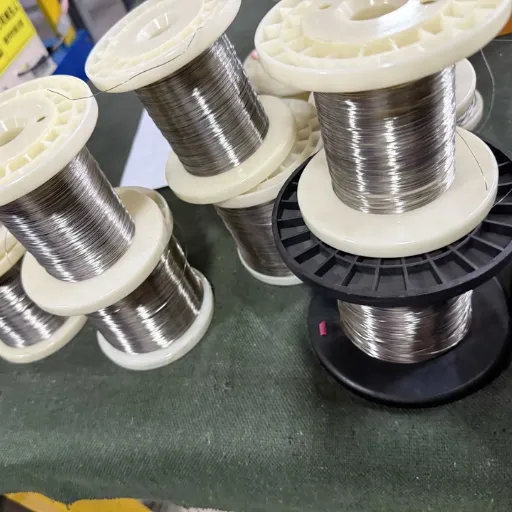
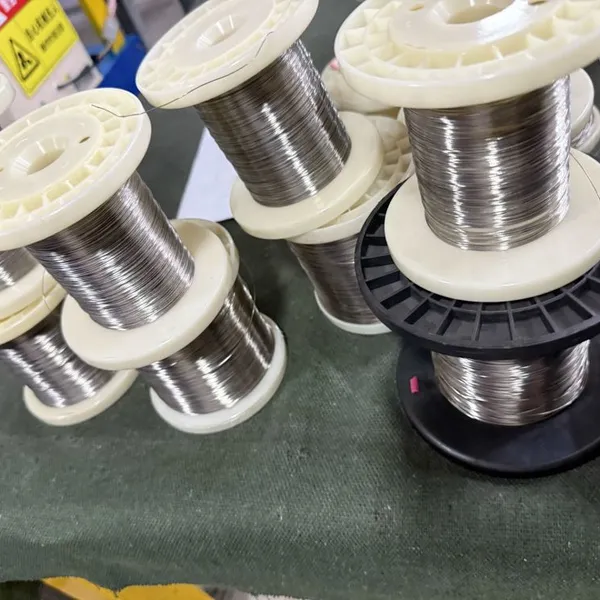
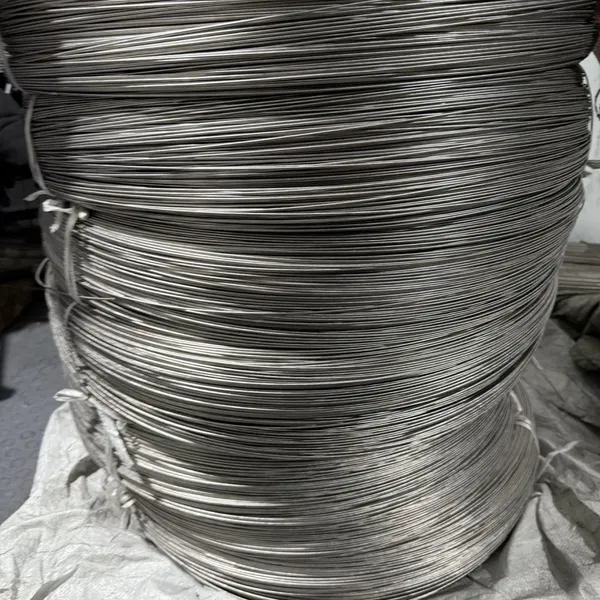
A spool identifies a delivery form. It does not, by itself, establish a welding-filler classification.
A complete request states the required standard edition, designation or classification, dimensions, form, condition, packaging, and documents.
Selection and substitution of welding filler must follow the buyer's approved welding procedure and project requirements.
If you are collecting material options for a project, start with the Titanium Wire category and submit the specification details that define the requested item.
What “Titanium Wire” Means in a Purchase Request
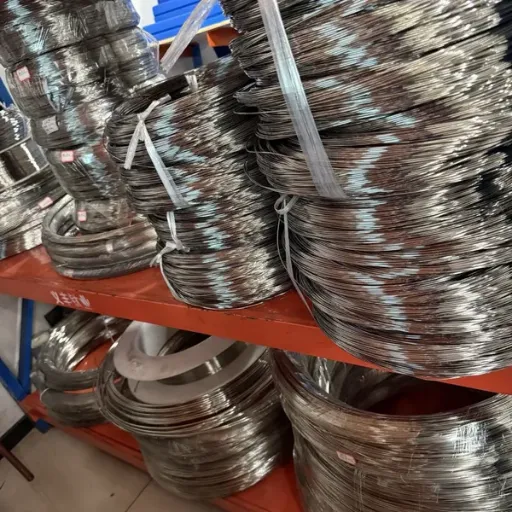
In a material purchase request, titanium wire normally describes a wire product specified for its material identity, dimensions, and acceptance requirements. ASTM describes B863 as a specification for titanium and titanium-alloy wire. Its public description identifies chemical composition, density, tensile strength, elongation, and hardness among the subjects covered.
That does not mean every request for titanium wire has the same conditions. A buyer may need a stated grade or designation, a diameter and tolerance, a condition, a straight length, coil, or spool form, and a defined documentation package. The applicable drawing or purchase specification decides what must be confirmed.
Use the titanium wire vs welding wire distinction before a request moves from engineering to purchasing. It preserves the information that a quotation needs.
Illustrative scenario: A procurement team requests “Grade 2 titanium wire, 1.0 mm.” The buyer may still need to clarify whether the wire is for a formed component, a non-welding use, or a welding consumable. Those uses can point to different governing requirements. The short description is useful as a starting point, but it is not a complete acceptance basis.
Material-wire questions to settle first
Before requesting material wire, put these facts in the RFQ:
governing standard and the edition required by the contract;
grade or material designation;
diameter, tolerance, and any dimensional drawing;
straight length, coil, or spool delivery form;
condition or surface requirement;
quantity, delivery unit, destination, timing, and allowed deviations;
certificate, report, marking, or other document requirements.
This list does not promise that a supplier provides every option. It makes the buyer's requirement testable before an offer is compared.
What Makes Titanium Welding Wire Different?
For titanium wire vs welding wire, the welding-wire side of the comparison has a separate procurement role. It is a consumable used in fusion-welding work, so the request must connect to the classification and project requirements for that work. AWS states that A5.16/A5.16M:2023 prescribes classification requirements for more than 30 titanium and titanium-alloy welding electrodes and rods, based on chemical composition.
The public 2013 edition of AWS A5.16/A5.16M describes its scope as solid wire electrodes, solid wires, and rods for fusion welding of titanium and titanium alloys. Use that public document to understand the scope, but use the standard edition named by the project for contractual acceptance.
The distinction is not merely vocabulary. A welding-wire RFQ needs a classification reference and the buyer's approved procedure or project requirement. It may also need specific packaging, identification, and delivery-form information. That is why a material-wire quote should not be treated as a filler-wire quote without checking the governing documents.
This is the first commercial test in a titanium wire vs welding wire request: can every acceptance requirement be named?
A note about ERTi names
Buyers may use ERTi terminology when discussing titanium filler material. Treat that term as a clue to investigate the applicable AWS classification, not as a substitute for the full requirement. The request should still identify the controlling standard edition and the project's approved welding documentation.
Illustrative scenario: A purchase order says “titanium wire on spool for welding.” The form is known, but the required classification, packaging condition, identification, and acceptance documents are still unknown. Asking those questions before quoting creates a clearer comparison between offers.
Titanium Wire vs Welding Wire: ASTM B863 vs AWS A5.16
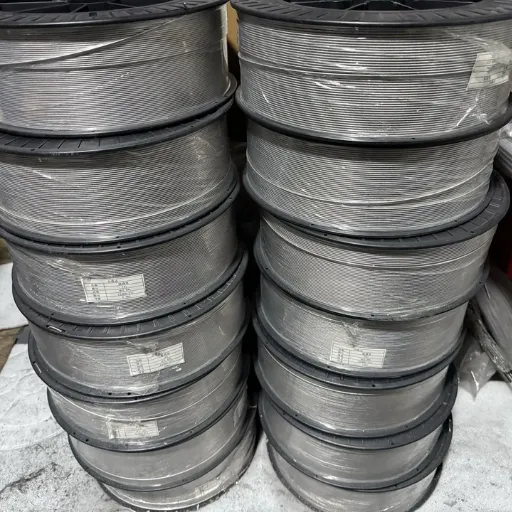
The following table gives a practical way to compare titanium wire vs welding wire. It is a procurement guide, not a substitute for a standard, drawing, or welding procedure.
Use this titanium wire vs welding wire table to frame the first supplier discussion.
| Comparison point | Material / general titanium wire | Titanium welding / filler wire |
|---|---|---|
| Procurement role | Material wire | Welding consumable |
| Common governing reference | ASTM B863 | AWS A5.16/A5.16M |
| Main request question | What material and dimensions are required? | What approved filler classification and project requirements apply? |
| Delivery form | State straight length, coil, or spool if needed | State wire form and spool needs if required |
| Acceptance focus | Buyer-specified material requirements | Buyer-specified consumable and welding-project requirements |
| Documents | Define required reports and markings in the RFQ | Define classification, identification, packaging, and document needs in the RFQ |
The ASTM B863-23 summary separates filler metal or weld wire from general wire and describes extra chemistry, spool, packaging-cleanliness, and identification considerations. It also directs titanium filler-metal requirements to AWS A5.16. Treat this as a useful orientation source; the purchased standard and the buyer's project documents remain the authority.
For titanium wire vs welding wire, the relevant standard is part of the item identity. Record it in the RFQ, purchase order, and offer review.
One practical result follows: a wire product can share a material family or a nominal diameter with another product and still have a different required acceptance path. In the titanium wire vs welding wire decision, start with the intended use, then identify the controlling document. Do not reverse that order.
Why diameter is only one line of the requirement
Diameter tells a supplier part of the physical description. It does not tell the supplier whether the buyer needs material wire, filler wire, a specific classification, a special spool condition, or a particular document package. The same is true of the word “spool.” It describes how wire is delivered, not which standard accepts it.
For filler-wire procurement, the secondary B863-23 summary calls out layer winding, cast, helix, packaging cleanliness, and identification as relevant special considerations. Do not assume they apply in the same way to every order. Put the required conditions in the RFQ and have the project specification determine the final criteria.
Building an RFQ for Material Titanium Wire
A material-wire RFQ should read like a checklist that another buyer could verify. Avoid a broad sentence such as “need titanium wire for production.” Give the supplier the facts needed to identify the requested material and form.
For titanium wire vs welding wire, this separate checklist prevents the material request from being mistaken for a filler request.
Material-wire RFQ checklist
State the controlling material standard and edition, if specified.
Name the grade or designation required by the drawing or purchase specification.
Give the wire diameter and tolerance. Attach the current drawing revision when it controls acceptance.
State the required form: straight lengths, coil, or spool. Include any required length or delivery-unit information.
Describe required surface or condition requirements without assuming a generic finish.
State quantity, destination, requested timing, and packaging instructions.
List the reports, certificates, marking, and other documents required for acceptance.
Identify any approved deviations before a supplier prepares the offer.
Illustrative scenario: A distributor wants to compare two material-wire offers. One offer lists a diameter and grade, while the other also repeats the requested standard edition, tolerance, coil form, destination, and document list. The second offer is easier to compare because the request itself defines more than the alloy name.
Buyers looking across product categories can review the site's titanium product range. Keep each inquiry tied to the product form and its project requirements so that plate, bar, tube, and wire are not treated as one interchangeable request.
The material-wire side of titanium wire vs welding wire should stay focused on the material specification and dimensions that the buyer actually requires.
Building an RFQ for Titanium Welding Wire
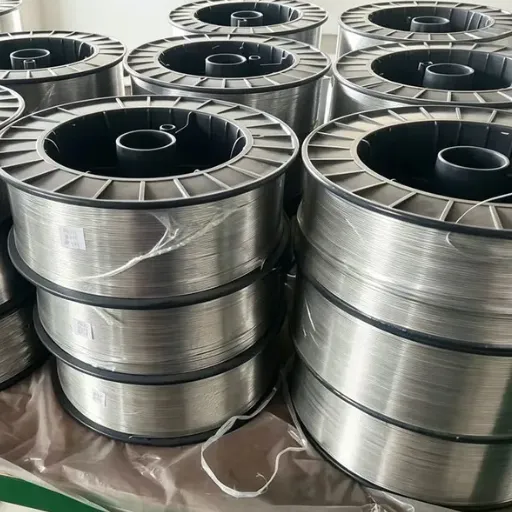
An RFQ for titanium welding wire needs the ordinary commercial facts plus the welding-consumable facts. This is the practical heart of titanium wire vs welding wire: both requests may ask for a diameter and quantity, but a filler-wire request also has to show what classification and project controls apply.
Welding-wire RFQ checklist
Identify the applicable AWS classification and the required standard edition.
Reference the buyer's approved welding procedure, drawing, or project requirement that controls filler selection.
State wire diameter, quantity, delivery form, and required spool or cut-length details.
Specify any required winding, cast, helix, cleanliness, packaging, labeling, or identification conditions.
List inspection, reports, certificates, and document requirements that the project requires.
Give the destination, requested timing, and any accepted deviations.
Ask the responsible project authority to resolve any proposed substitution before purchase.
This approach keeps engineering authority in the correct place. A supplier can review an RFQ against the supplied requirements, but the buyer's approved procedure and project documents control selection and substitution. That boundary protects both the order and the finished work.
For a short visual refresher on why titanium welding requires controlled practice, this Titanium Welding: The Basics You Need to Know video is relevant background. It is educational material only, not a replacement for a qualified welding procedure, a project specification, or an acceptance decision.
The welding-wire side of titanium wire vs welding wire needs the same discipline: use the approved project documents before evaluating a proposed item.
Common Request Problems and How to Avoid Them
Most confusion in titanium wire vs welding wire comes from incomplete language, not from a difficult comparison. The following checks can prevent a request from losing its technical meaning as it moves from engineering to purchasing.
“Grade 2 titanium wire” has no stated intended use
The phrase gives a material cue but does not establish whether the buyer requires general wire or a welding consumable. Add the governing standard, required form, documents, and the approved project reference where welding is involved.
“Titanium welding wire” has no classification or edition
The phrase identifies a use, but not the acceptance requirements. Add the AWS classification required by the project and the edition named in the contract or specification. If the buyer does not have that information, the project authority should supply it before a substitution decision is made.
“Spool wire” is used as a technical classification
Spool is a packaging or delivery description. It does not prove compliance with a material-wire or welding-filler standard. State the standard first, then describe the spool requirements that matter to the order.
The quote is evaluated only on unit price
Price cannot show whether two offers answer the same requirement. Compare the stated standard edition, designation or classification, diameter and tolerance, form, packaging, documents, delivery terms, and stated exceptions. If one offer omits a required item, ask for clarification before comparing totals.
FAQ: Titanium Wire vs Welding Wire
Is titanium mill wire the same as titanium welding wire?
Not automatically. In the titanium wire vs welding wire comparison, material wire and welding filler have different procurement roles and can follow different governing requirements. Confirm the intended use and the controlling documents.
Can ASTM B863 wire replace AWS A5.16 filler wire?
Do not assume substitution. ASTM B863 and AWS A5.16 address different product contexts. The buyer's project requirements and approved welding procedure must decide whether a proposed material is acceptable.
Does a spool mean the wire is welding wire?
No. A spool states a delivery form. It does not establish a welding-filler classification, packaging condition, or acceptance basis.
That is a frequent source of confusion in titanium wire vs welding wire comparisons.
What should be attached to a titanium wire RFQ?
Attach the current drawing or specification when it controls the product, along with the requested standard edition, grade or classification, dimensions and tolerance, form, quantity, destination, required documents, and accepted deviations. For welding wire, include the approved procedure or project requirement reference that governs selection.
Request a Specification-Based Titanium Wire Quote
Clear requirements make the titanium wire vs welding wire choice easier to communicate. For material wire, provide the material standard, grade, dimensions, form, and document requirements. For welding wire, add the applicable classification and the approved project requirements that control selection.
Use the titanium wire vs welding wire comparison as an RFQ review step before submitting the order.
Xi'an Fengyao Technology Co., Ltd. presents a Titanium Wire category for product inquiries. Submit your specification through the category or contact Fengyao with the RFQ fields above. Final product details, supply terms, and technical acceptance should be confirmed against your inquiry and project documents.
Recently Posted
-
Titanium Material RFQ Checklist: What to Include Before You Request a Quote
October 14, 2026A complete titanium material RFQ checklist turns a material request into a comparable quotation package. It should name the produc Read More
 -
Titanium Material Certificate: How to Check MTC, MTR, and Traceability
October 14, 2026A titanium material certificate supports receiving only when it can be matched to the delivered item, the purchase order or drawin Read More
 -
How to Choose a Titanium Supplier: Specifications, Documents, and Quote Checks
October 13, 2026The best way to choose a titanium supplier is to compare each offer against a written material requirement. Start with the product Read More
 -
Commercially Pure Titanium vs Titanium Alloy: Standards, Forms, and RFQ Requirements
October 13, 2026The practical difference in commercially pure titanium vs titanium alloy begins with material identity. In the public scope of AST Read More

Contact Us
Recommended Products
-
 Titanium Alloy Plate Gr5 Gr7 Gr9 Gr12 Gr23 Cold Rolled Titanium Sheet Custom SizeNegotiableMOQ: 1 Ton
 -
Gr2 Titanium Alloy Rod Pickled Surface Hexagonal Titanium Bar Custom CuttingUS$ 20 - 40MOQ: 100 Kilograms
-
Grade1 Pure Titanium Wire ASTM B863 Standard Spool Titanium Wire Custom DiameterNegotiableMOQ: 100 Kilograms
-
Grade 2 Seamless Titanium Tube ASTM B338 Titanium Pipe Custom Length Pickled Surface Titanium TubingUS$ 20 - 40MOQ: 100 Kilograms
-
1mm Titanium Sheet Hot Rolled Titanium Plate Support Waterjet And CNC CuttingUS$ 20 - 40MOQ: 100 Kilograms
-
Thin Titanium Fine Wire Pickled Surface Titanium Wire Custom Diameter ToleranceNegotiableMOQ: 100 Kilograms
-
Titanium Round Bar Stock Gr1 Pure Titanium Rod Multiple Shape SelectionUS$ 20 - 40MOQ: 100 Kilograms
-
High-Temperature Alloy 800 Nickel-Iron-Chromium Tubing for Industrial ApplicationsUS$ 20 - 40MOQ: 100 Kilograms
-
Gr5 Ti Aluminum Vanadium Wire Titanium Welding Wire AWS A5.16 ComplianceNegotiableMOQ: 100 Kilograms
-
Gr23 Titanium Rod Annealed Condition Custom Length Titanium Bar UT Inspection AvailableUS$ 20 - 40MOQ: 100 Kilograms
-
CP Grade4 Titanium Alloy Rod Rolled Process Hex Titanium Bar Industrial ApplicationUS$ 20 - 40MOQ: 100 Kilograms
-
1 Inch 2 Inch Titanium Tubing Seamless Titanium Pipe Custom Cutting Titanium Tube For EngineeringUS$ 20 - 40MOQ: 100 Kilograms
-
4x8 Titanium Sheet Pure Titanium Plate Mill Finish Surface Cold Rolled Titanium SheetUS$ 20 - 40MOQ: 100 Kilograms
-
2mm Titanium Alloy Sheet Polished Titanium Plate For Chemical Corrosion ResistanceUS$ 20 - 40MOQ: 100 Kilograms
-
Custom Cut Titanium Plate Titanium Alloy Sheet With CNC Waterjet Shearing ProcessingNegotiableMOQ: 1 Ton

-
3mm Titanium Round Bar Gr2 Titanium Rod Strict Diameter Tolerance ControlUS$ 20 - 40MOQ: 100 Kilograms
-
Titanium Hypodermic Tubing Micro Thin Wall Titanium Tube Custom Tolerance Titanium PipeUS$ 20 - 40MOQ: 100 Kilograms
-
Titanium Grade2 Seamless Pipe Thin Wall Titanium Tubing Custom Length Titanium TubeUS$ 20 - 40MOQ: 100 Kilograms
-
2mm Titanium Alloy Wire Polished Surface Spool Packed Titanium WireNegotiableMOQ: 100 Kilograms
-
Ti-6Al-4V Titanium Alloy Sheet Grade Gr5 Titanium Plate For Aerospace ApplicationUS$ 20 - 40MOQ: 100 Kilograms