
 Business License

How to Choose a Titanium Fittings Supplier: RFQ Requirements and Specification Checklist
Choose a titanium fittings supplier after defining the piping function, fitting type, connection, material callout, standard and revision, dimensions, wall condition, mating interface, and acceptance requirements. A material grade or a fitting name alone is not enough for a supplier to review a quotation request against the actual piping joint.
The term titanium fittings can cover elbows, tees, reducers, caps, stub ends, couplings, crosses, plugs, nipples, and custom components. Each can have a different geometry, connection, wall condition, and mating-pipe requirement. A titanium fittings supplier needs the controlled project information before a commercial response can be compared fairly.
This guide helps industrial buyers prepare a specification-led inquiry. Xi'an Fengyao Technology Co., Ltd. can review titanium-material and custom-processing scope against the information you provide. Final technical scope, availability, documentation, price, and delivery terms are confirmed through the RFQ.
Key takeaways
A titanium fittings supplier needs the controlled drawing and piping-joint definition, not only a grade.
State fitting type, connection, both-end dimensions, wall/schedule, geometry, and mating interface separately.
Material and dimensional standards must be listed with the required revision and role.
State inspection, documentation, marking, packaging, and deviation requirements when the project requires them.
Compare written assumptions and exceptions before comparing price.
Start with the piping function and controlled drawing
Begin with the intended joint. Identify the system reference, fitting function, mating pipe or component, controlled drawing, and drawing revision. This lets a titanium fittings supplier understand whether the item changes direction, branches a line, reduces size, closes an end, joins a connection, or meets another defined system requirement.
Avoid requesting a “titanium reducer” or “titanium elbow” without the project documents. A fitting name does not establish end sizes, wall thickness, bend geometry, connection form, or orientation. The controlled drawing should remain the source of truth throughout the inquiry and quotation process.
Illustrative scenario: A buyer requests an eccentric reducer but supplies only two nominal sizes. The piping drawing also defines both wall conditions, the offset, the flat-side orientation, the length, and the weld-end condition. Supplying those fields allows a titanium fittings supplier to review the actual component rather than an assumed reducer.
Define type, connection, and geometry
State the exact fitting type from the controlled documents. Common terms in current supplier pages include elbow, tee, reducer, cap, stub end, coupling, cross, plug, and nipple. They are useful RFQ vocabulary, but they are not interchangeable descriptions of a finished component.
Connection form
Identify whether the project calls for butt-weld, socket-weld, threaded, or another defined connection. Include the end preparation, mating pipe/fitting, and any drawing detail that controls the joint. Do not choose a connection form from a general application description.
Geometry and orientation
State every geometry field that applies: angle, radius, both end sizes, both end walls, length, branch size, reduction direction, offset, center-to-end dimension, and orientation. Asymmetrical items need especially clear drawings. The SAKY eccentric-reducer page uses flat-side orientation, both end sizes and walls, offset, length, weld ends, grade, and inspection as RFQ fields. Treat this as a current SERP procurement pattern, not a product claim for Fengyao.
Illustrative scenario: Two quotations appear to cover the same tee, but one assumes an equal tee and the other assumes a reducing branch. The buyer resolves the difference by issuing the controlled branch dimensions and wall information to both sources.
State material, standard, and revision
Copy the material callout exactly from the project specification. Do not select a titanium grade from a general corrosion or temperature statement. A titanium fittings supplier needs the required designation, condition where specified, governing material document, revision, and any permitted alternative.
Current commercial pages often associate ASTM B363 or ASME SB363 with titanium pipe-fitting material/product requirements, and ASME B16.9 or B16.11 with fitting dimensions. Use these names only when the project requires them and state the exact revision. A material reference does not automatically define dimensions, and a dimensional standard does not prove a particular fitting is available or compliant.
If several documents apply, say which one controls material, dimensions, end preparation, inspection, and acceptance. This gives the titanium fittings supplier a clear basis for identifying conflicts or open questions before quotation.
Define the mating pipe and interface
The fitting cannot be fully defined without the parts it joins. State the NPS, DN, OD, wall/schedule, end condition, and mating pipe/nozzle/fitting where the project specifies them. Attach the drawing that controls tolerances, preparation, and assembly interface.
Do not infer matching dimensions from a single nominal size. When a system includes different wall conditions or nonstandard components, identify both ends independently. A titanium fittings supplier should be able to see the complete joint definition, including any customer-supplied components and interface boundaries.
Illustrative scenario: A project team supplies the nominal size for an elbow but omits the pipe wall and end preparation. The fitting cannot be compared reliably until those controlled interface fields are added to the RFQ.
Make inspection, documents, and acceptance explicit
List the exact evidence the project requires. This may include a named material document, dimensional record, inspection method, marking, packaging, traceability request, or other acceptance item. State the required content, scope, acceptance criteria, and approving party where the project needs them.
Do not request “full certification” or “standard inspection” without defining the requirement. Requested evidence is not a promise that it will be available. It must be confirmed in the supplier’s written response and reviewed against the controlled project documents.
Also state how deviations and substitutions are controlled. If an alternative material, dimension, connection, drawing revision, or document set requires approval, put the approval route in the RFQ. This prevents an exception from remaining hidden inside a commercial quotation.
What to send a titanium fittings supplier in an RFQ
Project and drawing: State the piping function, system reference, controlled drawing, and revision.
Type and connection: Identify the fitting type, connection form, end preparation, and special features.
Material: Give the exact grade/designation, condition if specified, material standard, and revision.
Dimensions: State both end sizes, OD/NPS/DN, walls/schedule, units, tolerances, and controlled geometry.
Geometry: Provide angle, radius, branch dimensions, reduction, offset, length, and orientation where applicable.
Mating interface: Identify matching pipe/nozzle/fitting and interface requirements.
Acceptance: List inspection, documents, marking, packaging, change control, and approval requirements.
Commercial context: State quantity, destination, and requested date. Final price, availability, and delivery require quotation confirmation.
Send the completed package to contact Fengyao. A specification-led review can then focus on the defined project requirement rather than a generic product name.
Compare supplier responses before selecting
Compare every quotation against the same drawing revision and RFQ. Confirm that each titanium fittings supplier is addressing the same type, material, standards, dimensions, walls, geometry, interfaces, documents, and commercial basis.
Ask each source to state assumptions, exclusions, alternatives, and open items in writing. A lower price may reflect a different wall, branch, end preparation, documentation scope, or delivery boundary. Create a comparison matrix with every RFQ field marked as confirmed, exception, assumption, or open question.
The confirmed titanium product range provides general material context only. It is not evidence of a fittings catalogue, so the controlled RFQ remains the authority for the requested component.
Submit a specification-based fitting inquiry
The best request to a titanium fittings supplier is a complete, revision-controlled description of the joint. Send the drawing, material callout, type, connection, both-end dimensions, walls, geometry, mating interface, acceptance requirements, quantity, and delivery context together.
For Fengyao, provide the same project package. Fengyao can review titanium-material and custom-processing scope against your inquiry. Final technical scope, availability, documentation, price, and delivery terms are confirmed through the RFQ, not inferred from this guide.
Frequently asked questions
What details are needed for a titanium fitting quote?
Include the controlled drawing, fitting type, connection, material, standards/revisions, both-end dimensions, wall/schedule, geometry, mating interface, acceptance requirements, quantity, destination, and requested date.
Is a titanium grade enough to specify a fitting?
No. The finished fitting also needs a defined type, connection, dimensions, wall condition, geometry, mating pipe, standards, and acceptance basis.
Do reducers need both-end dimensions and orientation?
Yes, where those details are required by the project. State both end sizes and walls, reduction/offset, length, orientation, and end condition on the controlled drawing or RFQ.
Which standard revision should be named?
Name the exact document and revision required by the project, and clarify whether it governs material, dimensions, connection, inspection, or another order requirement.
How should I compare quotes?
Normalize every response to the same drawing, material, dimensions, walls, interfaces, evidence, and commercial terms. Resolve written exceptions before comparing price.
Recently Posted
-
Titanium Fasteners: How to Prepare a Clear RFQ and Compare Supplier Responses
October 21, 2026Titanium fasteners should be sourced from a complete, revision-controlled requirement rather than a short product name. A usable r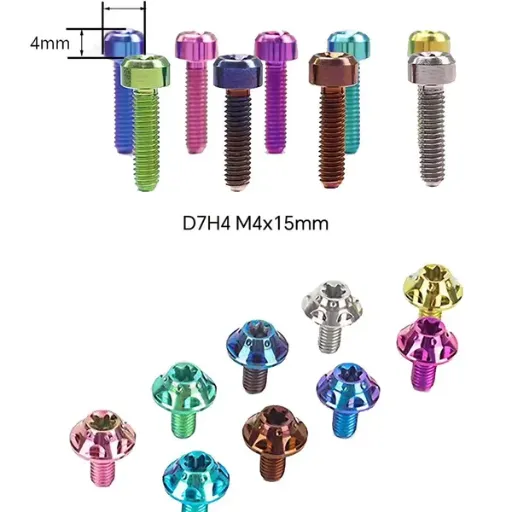 Read More
-
How to Choose a Titanium Flange Supplier: RFQ Requirements and Specification Checklist
October 19, 2026Choose a titanium flange supplier after defining the complete piping-joint requirement. A usable RFQ identifies the flange type, m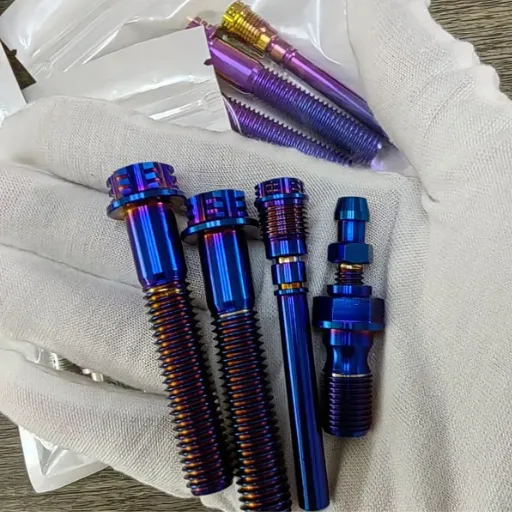 Read More
-
How to Choose a Titanium Anode Supplier: RFQ Requirements and Specification Checklist
October 19, 2026Choose a titanium anode supplier after you have defined the electrochemical duty, electrolyte or environment, operating conditions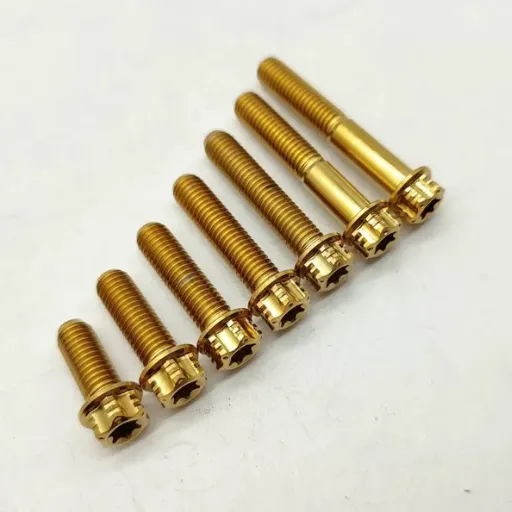 Read More
-
How to Choose a Titanium Forgings Supplier: RFQ Requirements and Specification Checklist
October 16, 2026Choose a titanium forgings supplier after you have defined the forged part, material callout, drawing revision, acceptance require Read More

Contact Us
Recommended Products
-
 Titanium Alloy Plate Gr5 Gr7 Gr9 Gr12 Gr23 Cold Rolled Titanium Sheet Custom SizeNegotiableMOQ: 1 Ton
-
Gr2 Titanium Alloy Rod Pickled Surface Hexagonal Titanium Bar Custom CuttingUS$ 20 - 40MOQ: 100 Kilograms
-
Grade1 Pure Titanium Wire ASTM B863 Standard Spool Titanium Wire Custom DiameterNegotiableMOQ: 100 Kilograms
-
Grade 2 Seamless Titanium Tube ASTM B338 Titanium Pipe Custom Length Pickled Surface Titanium TubingUS$ 20 - 40MOQ: 100 Kilograms
-
1mm Titanium Sheet Hot Rolled Titanium Plate Support Waterjet And CNC CuttingUS$ 20 - 40MOQ: 100 Kilograms
-
Thin Titanium Fine Wire Pickled Surface Titanium Wire Custom Diameter ToleranceNegotiableMOQ: 100 Kilograms
-
Titanium Round Bar Stock Gr1 Pure Titanium Rod Multiple Shape SelectionUS$ 20 - 40MOQ: 100 Kilograms
-
High-Temperature Alloy 800 Nickel-Iron-Chromium Tubing for Industrial ApplicationsUS$ 20 - 40MOQ: 100 Kilograms
-
Gr5 Ti Aluminum Vanadium Wire Titanium Welding Wire AWS A5.16 ComplianceNegotiableMOQ: 100 Kilograms
-
Gr23 Titanium Rod Annealed Condition Custom Length Titanium Bar UT Inspection AvailableUS$ 20 - 40MOQ: 100 Kilograms
-
CP Grade4 Titanium Alloy Rod Rolled Process Hex Titanium Bar Industrial ApplicationUS$ 20 - 40MOQ: 100 Kilograms
-
1 Inch 2 Inch Titanium Tubing Seamless Titanium Pipe Custom Cutting Titanium Tube For EngineeringUS$ 20 - 40MOQ: 100 Kilograms
-
4x8 Titanium Sheet Pure Titanium Plate Mill Finish Surface Cold Rolled Titanium SheetUS$ 20 - 40MOQ: 100 Kilograms
-
2mm Titanium Alloy Sheet Polished Titanium Plate For Chemical Corrosion ResistanceUS$ 20 - 40MOQ: 100 Kilograms
-
Custom Cut Titanium Plate Titanium Alloy Sheet With CNC Waterjet Shearing ProcessingNegotiableMOQ: 1 Ton

-
3mm Titanium Round Bar Gr2 Titanium Rod Strict Diameter Tolerance ControlUS$ 20 - 40MOQ: 100 Kilograms
-
Titanium Hypodermic Tubing Micro Thin Wall Titanium Tube Custom Tolerance Titanium PipeUS$ 20 - 40MOQ: 100 Kilograms
-
Titanium Grade2 Seamless Pipe Thin Wall Titanium Tubing Custom Length Titanium TubeUS$ 20 - 40MOQ: 100 Kilograms
-
2mm Titanium Alloy Wire Polished Surface Spool Packed Titanium WireNegotiableMOQ: 100 Kilograms
-
Ti-6Al-4V Titanium Alloy Sheet Grade Gr5 Titanium Plate For Aerospace ApplicationUS$ 20 - 40MOQ: 100 Kilograms