
 Business License

Titanium Fasteners: How to Prepare a Clear RFQ and Compare Supplier Responses
Titanium fasteners should be sourced from a complete, revision-controlled requirement rather than a short product name. A usable request identifies the fastener type, material callout, dimensions, thread, mating hardware, governing documents, acceptance evidence, quantity, and delivery context.
That level of detail matters because titanium fasteners can describe many different parts: bolts, cap screws, socket screws, nuts, washers, studs, and threaded rod. A grade name by itself does not define the head style, thread engagement, paired component, or records a project expects to review. This guide gives industrial buyers a practical way to prepare an RFQ and compare replies on the same basis.
Xi'an Fengyao Technology Co., Ltd. can review titanium-material and custom-processing scope against the information you provide. Final capability, technical scope, documents, availability, price, and delivery terms must be confirmed through the RFQ.
Key takeaways
Titanium fasteners need a defined assembly function, not only a material name.
Type, dimensions, thread, mating components, and document revision should be separate RFQ fields.
A project standard and its revision should be named when the drawing or contract requires one.
Inspection and documentation requirements must be written before quotation comparison.
Compare supplier responses line by line before treating price as comparable.
Start With the Assembly Before You Request Titanium Fasteners
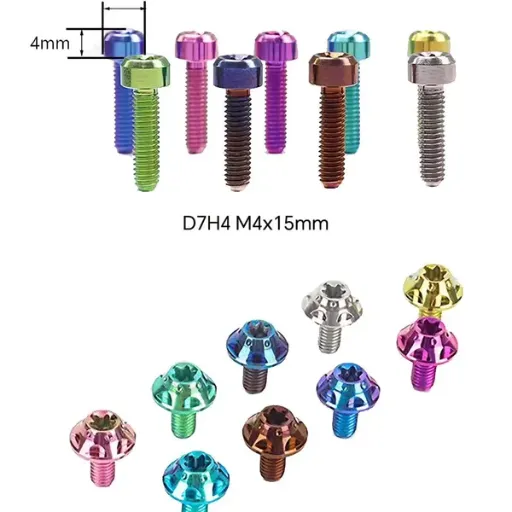
Begin with the joint or assembly. Explain what the part connects, the mating component, the controlled drawing number, and the drawing revision. This lets a potential source review titanium fasteners against the actual interface instead of guessing from a phrase such as "titanium bolt."
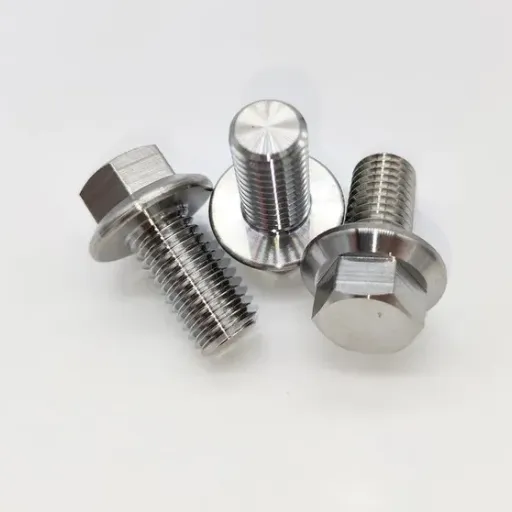
State the fastener family as precisely as possible. A bolt, hex cap screw, socket head cap screw, machine screw, nut, washer, stud, or threaded rod is a request category, not a complete definition. Include the head form, bearing surface, shank details, thread length, washer shape, nut form, or other geometry that the controlled document specifies.
Put the controlled document first
A drawing is usually the clearest source of truth. Attach the current revision and identify any linked data sheet, bill of materials, or purchase specification. If a replacement part must match an installed assembly, provide the approved interface record or dimensions rather than relying only on a photo.
Illustrative scenario: A maintenance buyer asks for titanium fasteners using only nominal diameter and length. The joint actually needs a particular socket-head configuration, a specified threaded length, and a matching washer. Adding the approved drawing makes the missing requirements visible before the buyer compares quotations.
The request should also say whether the supplier is quoting one component or a set. For example, a stud may require nuts and washers, while a bolted assembly may require the buyer to define which party supplies each item. This avoids a reply that is technically correct for a single piece but incomplete for the installed joint.
If the assembly has a controlled torque method, locking approach, insulation requirement, vibration condition, temperature condition, or chemical exposure, list it as project information. Do not ask a supplier to infer operating conditions from the word titanium. The receiving team should review any proposed suitability against its own design basis.
Define the Type, Geometry, and Thread of Titanium Fasteners
Once the assembly is clear, make each titanium fasteners line item measurable. Use a table or a drawing reference for each part number. This creates a common basis for technical review and helps prevent one supplier from filling gaps with assumptions that another supplier does not make.
Record dimensions in one system
State nominal diameter, overall length, head style, head dimensions where required, shank length, threaded length, washer dimensions, nut height, and units. Identify controlled tolerances and the document that controls them. When a feature is not standard, show it on a revision-controlled drawing.
Thread information needs the same care. State whether the thread is metric or inch-based, then give the pitch or threads per inch, handedness when relevant, and any required class or fit. Add the mating component and its thread requirement. A nominal diameter without these fields is not a complete thread definition.
Identify the paired hardware
Titanium fasteners often work as a system rather than as a single part. Identify the corresponding nut, washer, threaded insert, flange, or equipment interface. State whether the buyer supplies the mating component, whether it is already installed, and which document controls the fit.
Illustrative scenario: A project team asks for a set of titanium fasteners with an inch diameter, but the installed mating hardware follows a different thread designation. A line-item RFQ that lists the mating part and thread prevents the quote from being evaluated as though those two interfaces were interchangeable.
For a concise buyer-facing product overview, readers can browse Fengyao's public product overview. It is not proof of a titanium fasteners product range. The RFQ and controlled project documents remain the basis for a capability review.
State the Material Requirement and Governing Documents
Copy the material callout exactly from the controlled design or purchase specification. If the project already names a titanium grade or designation, preserve that language and its required condition. If the material is still open, describe the actual operating context and ask the supplier to confirm whether a proposed option can meet the specified project requirements.
Avoid selecting titanium fasteners solely from a general material comparison. Material selection must account for the joint, the environment, applicable design rules, the mating components, and the evidence the project requires. A supplier quotation should distinguish confirmed scope from questions that still need the buyer's decision.
Cite a standard only when it applies
Some requests use established fastener standards. ASTM's F468-23(2026) covers commercial wrought nonferrous bolts, hex cap screws, socket head cap screws, and studs for general use. ASTM's F467-24(2026) covers commercial wrought nonferrous nuts for general use and points to F468 for related bolts, cap screws, and studs.
These sources are examples of how a buyer may identify a governing document. They do not mean that every titanium fasteners order uses these standards, and they do not establish a Fengyao product, manufacturing, testing, or compliance claim. State the exact standard, edition, and revision if the controlled project documents require it. Also say whether that document governs material, dimensions, testing, workmanship, or another part of acceptance.
Record any permitted alternate material, processing route, or deviation path in writing. A buyer should not treat a broad reference to an industry standard as a substitute for the actual drawing and contract requirements.
Include Assembly Conditions, Inspection, and Documentation
Make the conditions around titanium fasteners visible before the supplier prices the request. List any specified surface condition, mating material, lubrication policy, torque method, cleanliness requirement, temperature range, vibration condition, or chemical exposure. Those factors may affect the review, but this article does not make performance predictions for any configuration.
Turn “quality requirements” into reviewable fields
Replace a vague request for a "certificate" or "full inspection" with a specific list of required evidence. Depending on the project, the buyer may need a named material document, dimensional record, test report, marking requirement, packaging requirement, sample, first-article review, or independent-inspection arrangement. Identify the acceptance criteria, scope, timing, and approving party where required.
Requested records are not automatically available. Ask each source to confirm what documentation and inspection evidence can be supplied for the exact line item, quantity, and specification. This is especially important when a purchase package contains titanium fasteners with different dimensions, standards, or acceptance requirements.
Illustrative scenario: A buyer needs titanium fasteners for a controlled assembly and asks for “all documents.” One supplier includes only a commercial packing record while another assumes a material document and dimensional check. Naming the exact records and approval route turns the difference into a visible quotation exception instead of a receiving dispute.
Define change control as well. If the project requires approval before a material, drawing, dimension, or documentation change, add that instruction to the RFQ. Use a document register for complex requests so engineering, procurement, and the supplier are reviewing the same revision set.
Use This Titanium Fasteners RFQ Checklist
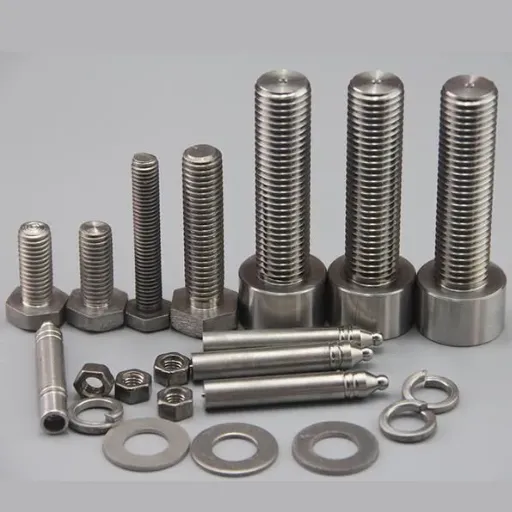
Before you send an inquiry, create one line for each required part. Mark unknown details as open questions. Leaving a field blank invites a default assumption that can make titanium fasteners quotes impossible to compare.
Assembly and part identification: Part number, joint or equipment reference, drawing number, and revision.
Fastener type: Bolt, cap screw, socket screw, nut, washer, stud, threaded rod, or drawing-defined custom component.
Material requirement: Exact designation, grade/condition if specified, governing material document, and revision.
Geometry: Nominal diameter, overall length, head or nut form, shank and threaded length, washer dimensions, units, and controlled tolerances.
Thread and mating item: Metric or inch system, pitch/TPI, handedness, class/fit where specified, and the paired component.
Applicable documents: Drawing, standard, revision, customer specification, and the purpose of each document.
Assembly conditions: Specified surface condition, mating materials, torque/lubrication policy, environment, or other project-defined constraints.
Acceptance evidence: Requested inspection, documents, marking, packaging, samples, witness points, and deviation approval route.
Commercial context: Quantity by line item, required destination, requested date, and any stated Incoterm.
Send this package to contact Fengyao with your requirements. Fengyao can review titanium-material and custom-processing scope from the submitted information. Keep final capability, documents, availability, price, and delivery subject to written RFQ confirmation.
Compare Titanium Fasteners Supplier Responses Before Selecting
When several quotations arrive, normalize them against the same document revision and RFQ. A low headline price is not comparable if one proposal assumes a different thread, material callout, document scope, quantity basis, or delivery boundary.
Build a line-by-line comparison matrix
Create columns for each titanium fasteners item and rows for the part type, drawing revision, material requirement, geometry, thread, mating hardware, governing document, inspection evidence, documents, quantity, price basis, delivery terms, and open questions. Mark every cell as confirmed, exception, assumption, or open.
Ask each supplier to identify omissions, substitutions, and deviations in writing. Then route technical differences to the responsible engineer or project reviewer before purchase release. The comparison matrix is also useful when the order changes, because it provides a record of which party accepted each revision.
Check that the response names the same unit system and quantity basis. A response for a single item, a kit, or a lot can look similar until the buyer compares the included hardware and commercial terms. Record packaging and marking assumptions when the project specifies them.
Resolve open questions before the order
Do not turn a preliminary quotation into a technical agreement. Assign an owner and decision date to every unresolved field. Update the controlled package when a material callout, thread, dimensional feature, document requirement, or delivery condition changes.
You may also learn about Fengyao before submitting an inquiry. Company information does not replace the engineering and procurement confirmation needed for a particular titanium fasteners request.
Submit a Specification-Based Titanium Fasteners Inquiry
The most effective titanium fasteners request gives every source the same controlled information. Send the drawing, part type, material requirement, geometry, thread, mating hardware, applicable documents, inspection/document requirements, quantity, and delivery context together.
For Fengyao, share the same package through the Fengyao contact page. The team can review the stated titanium-material and custom-processing scope. Confirm the final technical scope, documentation, availability, commercial terms, and delivery terms in the written response before placing an order.
Frequently Asked Questions
What details should an RFQ for titanium fasteners include?
Include the part type, drawing revision, material callout, dimensions, thread, mating component, applicable standard/revision where required, acceptance evidence, quantity, destination, and requested date.
Is a titanium grade enough to define titanium fasteners?
No. The finished part also needs its type, geometry, thread, mating interface, applicable documents, and acceptance basis. The controlled drawing or specification should define these details.
Should I include an ASTM standard in the request?
Include the exact standard and revision when the project documents require it. State what it controls. Do not assume one standard applies to every titanium fasteners configuration.
What thread details should I provide?
State the metric or inch system, nominal diameter, pitch or threads per inch, handedness where relevant, class/fit if specified, and the mating component or controlled drawing.
How should I ask for inspection documents?
Name the required document or record, define its scope and acceptance criteria, and ask the supplier to confirm availability for the exact order. Avoid an undefined request for “all certificates.”
Recently Posted
-
How to Choose a Titanium Fittings Supplier: RFQ Requirements and Specification Checklist
October 21, 2026Choose a titanium fittings supplier after defining the piping function, fitting type, connection, material callout, standard and r Read More
-
How to Choose a Titanium Flange Supplier: RFQ Requirements and Specification Checklist
October 19, 2026Choose a titanium flange supplier after defining the complete piping-joint requirement. A usable RFQ identifies the flange type, m Read More
-
How to Choose a Titanium Anode Supplier: RFQ Requirements and Specification Checklist
October 19, 2026Choose a titanium anode supplier after you have defined the electrochemical duty, electrolyte or environment, operating conditions Read More
-
How to Choose a Titanium Forgings Supplier: RFQ Requirements and Specification Checklist
October 16, 2026Choose a titanium forgings supplier after you have defined the forged part, material callout, drawing revision, acceptance require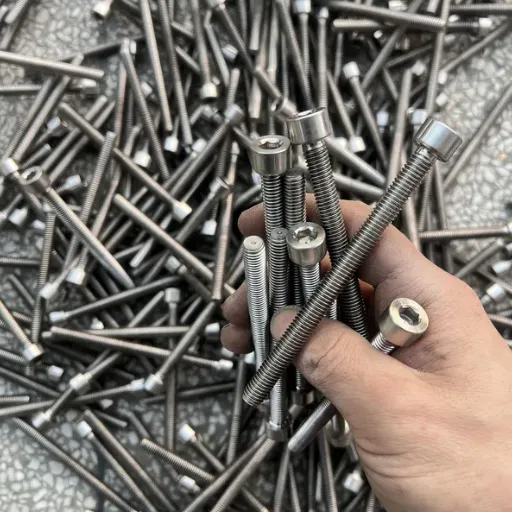 Read More

Contact Us
Recommended Products
-
 Titanium Alloy Plate Gr5 Gr7 Gr9 Gr12 Gr23 Cold Rolled Titanium Sheet Custom SizeNegotiableMOQ: 1 Ton
-
Gr2 Titanium Alloy Rod Pickled Surface Hexagonal Titanium Bar Custom CuttingUS$ 20 - 40MOQ: 100 Kilograms
-
Grade1 Pure Titanium Wire ASTM B863 Standard Spool Titanium Wire Custom DiameterNegotiableMOQ: 100 Kilograms
-
Grade 2 Seamless Titanium Tube ASTM B338 Titanium Pipe Custom Length Pickled Surface Titanium TubingUS$ 20 - 40MOQ: 100 Kilograms
-
1mm Titanium Sheet Hot Rolled Titanium Plate Support Waterjet And CNC CuttingUS$ 20 - 40MOQ: 100 Kilograms

-
Thin Titanium Fine Wire Pickled Surface Titanium Wire Custom Diameter ToleranceNegotiableMOQ: 100 Kilograms
-
Titanium Round Bar Stock Gr1 Pure Titanium Rod Multiple Shape SelectionUS$ 20 - 40MOQ: 100 Kilograms
-
High-Temperature Alloy 800 Nickel-Iron-Chromium Tubing for Industrial ApplicationsUS$ 20 - 40MOQ: 100 Kilograms
-
Gr5 Ti Aluminum Vanadium Wire Titanium Welding Wire AWS A5.16 ComplianceNegotiableMOQ: 100 Kilograms
-
Gr23 Titanium Rod Annealed Condition Custom Length Titanium Bar UT Inspection AvailableUS$ 20 - 40MOQ: 100 Kilograms
-
CP Grade4 Titanium Alloy Rod Rolled Process Hex Titanium Bar Industrial ApplicationUS$ 20 - 40MOQ: 100 Kilograms
-
1 Inch 2 Inch Titanium Tubing Seamless Titanium Pipe Custom Cutting Titanium Tube For EngineeringUS$ 20 - 40MOQ: 100 Kilograms
-
4x8 Titanium Sheet Pure Titanium Plate Mill Finish Surface Cold Rolled Titanium SheetUS$ 20 - 40MOQ: 100 Kilograms
-
2mm Titanium Alloy Sheet Polished Titanium Plate For Chemical Corrosion ResistanceUS$ 20 - 40MOQ: 100 Kilograms
-
Custom Cut Titanium Plate Titanium Alloy Sheet With CNC Waterjet Shearing ProcessingNegotiableMOQ: 1 Ton

-
3mm Titanium Round Bar Gr2 Titanium Rod Strict Diameter Tolerance ControlUS$ 20 - 40MOQ: 100 Kilograms
-
Titanium Hypodermic Tubing Micro Thin Wall Titanium Tube Custom Tolerance Titanium PipeUS$ 20 - 40MOQ: 100 Kilograms
-
Titanium Grade2 Seamless Pipe Thin Wall Titanium Tubing Custom Length Titanium TubeUS$ 20 - 40MOQ: 100 Kilograms
-
2mm Titanium Alloy Wire Polished Surface Spool Packed Titanium WireNegotiableMOQ: 100 Kilograms
-
Ti-6Al-4V Titanium Alloy Sheet Grade Gr5 Titanium Plate For Aerospace ApplicationUS$ 20 - 40MOQ: 100 Kilograms