
 Business License

Titanium Bar Diameter Tolerance: How to Write a Clear RFQ
A titanium bar diameter tolerance should state the nominal diameter, permitted variation, controlling unit, governing standard and edition, delivered condition, and inspection requirement. It should also be separated from straightness, roundness, out-of-round, surface, length, and end-condition requirements.
The phrase “tight titanium bar diameter tolerance” is not enough for a purchase request. It leaves the allowable variation undefined, does not identify the measurement basis, and can cause suppliers to quote different product conditions. A complete RFQ gives every reviewer the same technical scope before commercial terms are compared.
Key takeaways
Write nominal diameter and the actual plus/minus, unilateral, or drawing-defined limit in the controlling unit.
State diameter tolerance separately from out-of-round, roundness, and straightness.
Name the required standard and edition, product condition, surface, length, end condition, quantity, and drawing revision.
Keep inch-to-metric conversions visible and say which unit controls acceptance.
Request inspection and documents by name, then obtain confirmation for the actual order.
Xi'an Fengyao Technology Co., Ltd. lists titanium bar/rod in its titanium product range. Submit a complete requirement through contact Fengyao for review. Availability, product condition, tolerance, documents, commercial terms, and acceptance remain subject to the specific inquiry.
What Titanium Bar Diameter Tolerance Actually Controls
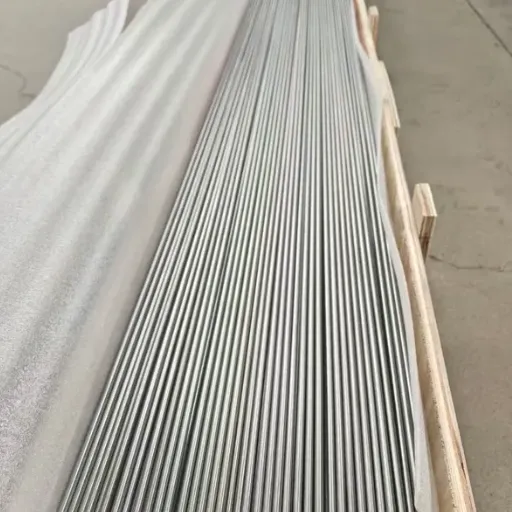
Titanium bar diameter tolerance describes the permitted difference between the actual diameter and the required diameter. It must be read with the nominal size, the unit, the material form, the condition, and the governing requirement. A titanium bar diameter tolerance without those elements can be misunderstood.
For a round bar, the nominal diameter identifies the intended section size. The tolerance defines how much that diameter may vary. It does not automatically define whether the bar is straight, whether the cross-section is sufficiently round, how the surface is finished, or whether the bar meets another drawing requirement.
Keep size and form requirements separate
Diameter tolerance is a size control. Out-of-round or roundness is a form-control question. Straightness concerns how far the bar axis departs from a straight reference over a stated length. A bar can satisfy its titanium bar diameter tolerance and still need separate review for straightness or form if the downstream process requires those limits.
Write each control on its own RFQ line. This avoids a supplier inferring a straightness or roundness requirement from a diameter value. It also helps the buyer compare quotations that use different words for the same or similar concepts.
Illustrative scenario: “tight” had no number
An illustrative buyer requests a “25 mm titanium bar with tight tolerance.” One supplier assumes a common commercial tolerance, another asks for a limit, and a third prices a different delivered condition. The buyer revises the request to state nominal diameter, a numerical limit, the controlling metric unit, condition, surface, length, and inspection requirement. The new titanium bar diameter tolerance request can be reviewed without guessing.
Do not apply round-bar language to every section
Round bar uses a diameter. Flat, square, and hexagonal bar need section-specific dimensions. A hex bar normally needs across-flats controls; a flat bar needs thickness and width controls. The buyer should use the section terminology that appears on the drawing instead of applying a round-bar diameter tolerance to a different shape.
Use the same definition across the purchase file
The RFQ, drawing, purchase order, inspection plan, and supplier response should use the same unit and requirement wording. If a value is converted from inches to millimetres, state which version controls acceptance. Do not round a converted number without written agreement from the responsible technical team.
Read a Tolerance Against Its Standard and Condition
The correct titanium bar diameter tolerance depends on the governing requirement and the delivered condition. The public page for ASTM B348/B348M-21 states that the specification covers annealed titanium and titanium-alloy bars and billets. Its abstract also names several possible furnished conditions for covered annealed material, including descaled, sandblasted, ground, and rough turned.
Those standard-level terms help a buyer describe the requirement. They do not prove that any specific supplier offers a particular route, range, or tolerance. A buyer must state the applicable standard and edition, then identify the exact condition and acceptance controls needed for the project.
Put the edition and size band in the request
If ASTM B348 is the governing reference, include the edition named by the project. Do not assume that a standard number without an edition resolves every point. A titanium bar diameter tolerance may depend on the product form, nominal-size band, condition, and other standard details, while the drawing or customer specification may add controls beyond the standard.
The ASTM nonferrous metal standards index can help locate the standards family. It cannot choose the governing specification for the buyer or establish that a supplier has accepted it.
Describe condition without assuming a route
A surface description and a delivered condition are not interchangeable with a numerical diameter tolerance. If the project needs a particular condition, put it in the RFQ. If the drawing calls for machining allowance, state it separately from the finished diameter and tolerance. A supplier should identify any assumption, not hide it behind a broad product label.
Illustrative scenario: the same size had different scopes
An illustrative team obtains two quotations for a titanium bar diameter tolerance requirement. Both mention the same nominal diameter, but one response assumes a rougher delivered condition and the other lists a condition that needs a separate confirmation. The team adds condition, surface, inspection, and measurement requirements to its matrix. The comparison becomes useful because the scope difference is visible.
Keep material selection with the project owner
This article explains how to describe dimensional requirements. It does not select material for aerospace, medical, chemical, marine, or other controlled applications. The responsible engineer and governing documents should define material grade, condition, testing, and acceptance requirements before sourcing begins.
Specify Diameter, Straightness, and Surface Together
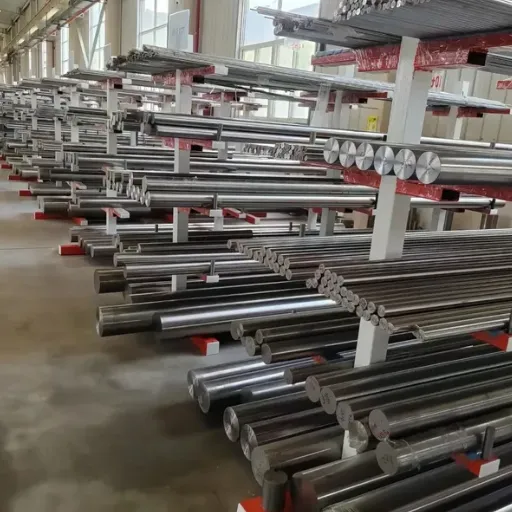
A complete tolerance-sensitive request combines size, geometry, condition, and measurement information. Start with the nominal diameter and titanium bar diameter tolerance. Then add any out-of-round or roundness limit, straightness limit with gauge length, surface requirement, delivered condition, length, end condition, and quantity.
State how the diameter requirement should be read
Use a clear format: nominal diameter, unit, allowed variation, and whether the tolerance is bilateral, unilateral, or controlled by a drawing. If the project requires a particular measurement location, temperature, instrument, or acceptance method, include that reference. If it does not, avoid inventing a default method.
The buyer should also state whether the limit applies to full supplied length, a cut length, or a specific inspection sample. A requirement that matters to a long turning operation may need a different description from one that matters only after a short part is cut.
Give straightness its own line
Straightness needs a limit and a reference length or gauge length. It is not implied by a diameter tolerance. If the project needs a specific measurement method, identify it. If the requirement is unresolved, write “to be confirmed” and ask the supplier to show any assumption in the reply.
Out-of-round or roundness should be treated the same way. Name the required form control and measurement basis where it affects acceptance. This keeps the titanium bar diameter tolerance from carrying requirements that it was never written to cover.
| RFQ control | Information to state |
|---|---|
| Diameter | Nominal value, controlling unit, and allowed variation |
| Form | Out-of-round or roundness limit and measurement basis, if required |
| Straightness | Limit, gauge length, and whether it applies to supplied or cut length |
| Condition | Surface, delivered condition, machining allowance, and end condition |
Include surface, allowance, and length
Surface and delivered condition can affect inspection and downstream work. State the project requirement and identify the drawing clause when one exists. If material removal is planned, record the required machining allowance separately from the tolerance. Do not assume that an oversize allowance is included just because the part will later be machined.
State length and length tolerance as well. Add end condition when it affects the next operation or receiving check. Then provide the quantity in pieces and, if useful, total mass. These fields give the supplier a fuller scope to review.
For site background, see Fengyao's company profile. The storefront identifies the business as a trading company, so every tolerance-related condition should be confirmed against the submitted requirement rather than inferred from a general catalogue statement.
Put Inspection and Documents into the Quote Request
Inspection requirements should be included with the titanium bar diameter tolerance, not after a price is selected. A generic request for a certificate can mean different records to different parties. Name each required document, inspection item, test, marking, or report and identify the source requirement.
Make the acceptance plan readable
State the drawing revision and each governing document. Identify whether the buyer needs a pre-order review, delivery-time record, receiving inspection information, or another project document. If sampling, inspection location, or the inspection method matters, write it in the RFQ or attach the relevant controlled clause.
Do not assume a supplier will provide a material test report, certificate, traceability record, third-party inspection, or special marking. Ask for each item explicitly and request order-specific confirmation. This is more useful than relying on a general quality statement.
Illustrative scenario: inspection was not defined
An illustrative buyer states a titanium bar diameter tolerance but leaves the inspection record as “standard certificate.” The supplier asks which record, revision, and acceptance point are needed. The buyer updates the RFQ with each required document and the drawing reference. The request becomes reviewable before the quotation is finalized.
Maintain a revision trail
Keep the RFQ, drawings, questions, replies, and clarifications together. When the titanium bar diameter tolerance changes, assign a revision and ask whether it changes technical scope, price, documents, or timing assumptions. A clear revision trail prevents a quotation from being compared to an obsolete requirement.
The video below is general terminology orientation only. It does not prove Fengyao inventory, manufacturing, inspection, or capability.
Compare Tolerance-Sensitive Titanium Bar Quotes
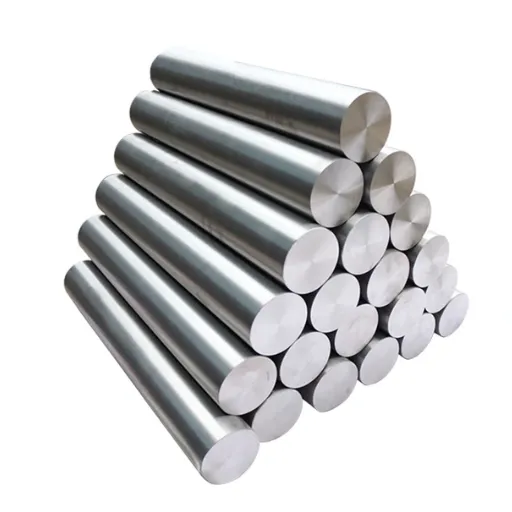
The price on a tolerance-sensitive bar quote is useful only when the technical scope is aligned. Two offers may name the same grade and nominal diameter while covering different conditions, form controls, documents, quantities, or delivery assumptions. Use a requirements matrix to expose the differences.
Review every response on one matrix
Create rows for grade, standard and edition, nominal diameter, titanium bar diameter tolerance, out-of-round or roundness, straightness, surface, condition, machining allowance, length, ends, quantity, inspection, documents, packaging, destination, price basis, and stated assumptions. Mark each item as confirmed, different, excluded, or pending.
If a supplier proposes an alternative, keep it in a deviations column. The responsible buyer or engineer can decide whether it is acceptable. Do not merge a proposed alternative into the original request simply because it appeared in a quotation.
Confirm commercial scope separately
Check whether each price is based on pieces, length, or mass and whether the quantity is the same in every reply. Ask how packaging, freight terms, taxes, and timing assumptions are handled when relevant. These questions clarify the commercial basis without implying a particular price or delivery commitment.
When the fields are complete, submit the request to contact Fengyao. Ask for a review that identifies scope, missing information, and assumptions. This gives the supplier a concrete request without promising stock, precision, documents, or outcome.
Copy-and-Send Titanium Bar Diameter Tolerance RFQ
Replace each bracketed field with the actual project requirement. For an unresolved item, write “to be confirmed” and identify the document or person that controls the decision.
Product: titanium round bar [or other project-specified form]
Material designation / grade: [state project requirement]
Applicable standard and edition: [state governing requirement]
Nominal diameter: [value and controlling unit]
Diameter tolerance: [plus/minus, unilateral, or drawing-defined limit]
Out-of-round / roundness: [state requirement, measurement basis, or “to be confirmed”]
Straightness: [limit, gauge length, measurement basis, or “to be confirmed”]
Length / end condition: [state requirement and length tolerance]
Surface and delivered condition: [state requirement]
Machining allowance: [if applicable]
Quantity: [pieces and/or total mass]
Drawing or revision: [attach if applicable]
Inspection and documents: [list every requirement]
Destination, packaging, and requested timing: [state]
Open technical or commercial items: [list for confirmation]
Before you send
Check that the unit is consistent, the drawing revision is current, and each titanium bar diameter tolerance has a clear measurement basis. Attach customer clauses that affect acceptance. Send the same RFQ revision to each supplier when comparable quotations are needed.
The Xi'an Fengyao Technology Co., Ltd. storefront is a starting point for its listed titanium material families. Submit a complete titanium bar diameter tolerance requirement through contact Fengyao and request confirmation of technical scope, document needs, commercial basis, and open items. A precise titanium bar diameter tolerance gives the review a clear starting point.
Frequently asked questions
What is titanium bar diameter tolerance?
It is the permitted variation around a stated nominal bar diameter. It should include the unit, the actual allowable limit, the governing requirement, and the product condition.
Is diameter tolerance the same as straightness?
No. Diameter controls size variation. Straightness needs its own limit and gauge length. Out-of-round or roundness may also need a separate form-control requirement.
Does ASTM B348 define every tolerance requirement?
It may be a governing reference when the project calls for it, but the buyer should state the edition and every drawing, condition, inspection, and document requirement that applies.
How do I request inspection documents?
Name each required document or record, identify the governing clause and revision, state when it is needed, and ask for order-specific confirmation.
Final note
A clear titanium bar diameter tolerance makes quote comparison more reliable. A titanium bar diameter tolerance should always be read with its standard, condition, and inspection basis. It does not establish supplier capability, availability, price, inspection, documents, or delivery until the actual requirement is reviewed and confirmed. Keep the dimensions, conditions, and acceptance requirements together in one controlled RFQ.
Recently Posted
-
Seamless vs Welded Titanium Tube: Compare Form, Standard, and Inspection
September 23, 2026The practical answer to seamless vs welded titanium tube is that neither route is automatically the right choice. Seamless and wel Read More
 -
Titanium Tube vs Pipe: Choose the Right Dimensional Language
September 23, 2026The practical difference in a titanium tube vs pipe request is usually the dimensional convention: tube is commonly specified by e Read More
 -
Thin Wall Titanium Tubing: Build a Specification-Ready RFQ
September 23, 2026Thin wall titanium tubing should be specified by its grade, standard, form, OD, ID when relevant, wall thickness, tolerances, oval Read More
 -
Titanium Bar for Machining: Build a Better Stock RFQ
September 22, 2026When buying titanium bar for machining, state the grade, condition, stock form, dimensions, tolerance, machining allowance, straig Read More

Contact Us
Recommended Products
-
 Titanium Alloy Plate Gr5 Gr7 Gr9 Gr12 Gr23 Cold Rolled Titanium Sheet Custom SizeNegotiableMOQ: 1 Ton
 -
Gr2 Titanium Alloy Rod Pickled Surface Hexagonal Titanium Bar Custom CuttingUS$ 20 - 40MOQ: 100 Kilograms
-
Grade1 Pure Titanium Wire ASTM B863 Standard Spool Titanium Wire Custom DiameterNegotiableMOQ: 100 Kilograms
-
Grade 2 Seamless Titanium Tube ASTM B338 Titanium Pipe Custom Length Pickled Surface Titanium TubingUS$ 20 - 40MOQ: 100 Kilograms
-
1mm Titanium Sheet Hot Rolled Titanium Plate Support Waterjet And CNC CuttingUS$ 20 - 40MOQ: 100 Kilograms
-
Thin Titanium Fine Wire Pickled Surface Titanium Wire Custom Diameter ToleranceNegotiableMOQ: 100 Kilograms
-
Titanium Round Bar Stock Gr1 Pure Titanium Rod Multiple Shape SelectionUS$ 20 - 40MOQ: 100 Kilograms
-
High-Temperature Alloy 800 Nickel-Iron-Chromium Tubing for Industrial ApplicationsUS$ 20 - 40MOQ: 100 Kilograms
-
Gr5 Ti Aluminum Vanadium Wire Titanium Welding Wire AWS A5.16 ComplianceNegotiableMOQ: 100 Kilograms
-
Gr23 Titanium Rod Annealed Condition Custom Length Titanium Bar UT Inspection AvailableUS$ 20 - 40MOQ: 100 Kilograms

-
CP Grade4 Titanium Alloy Rod Rolled Process Hex Titanium Bar Industrial ApplicationUS$ 20 - 40MOQ: 100 Kilograms
-
1 Inch 2 Inch Titanium Tubing Seamless Titanium Pipe Custom Cutting Titanium Tube For EngineeringUS$ 20 - 40MOQ: 100 Kilograms
-
4x8 Titanium Sheet Pure Titanium Plate Mill Finish Surface Cold Rolled Titanium SheetUS$ 20 - 40MOQ: 100 Kilograms
-
2mm Titanium Alloy Sheet Polished Titanium Plate For Chemical Corrosion ResistanceUS$ 20 - 40MOQ: 100 Kilograms
-
Custom Cut Titanium Plate Titanium Alloy Sheet With CNC Waterjet Shearing ProcessingNegotiableMOQ: 1 Ton

-
3mm Titanium Round Bar Gr2 Titanium Rod Strict Diameter Tolerance ControlUS$ 20 - 40MOQ: 100 Kilograms
-
Titanium Hypodermic Tubing Micro Thin Wall Titanium Tube Custom Tolerance Titanium PipeUS$ 20 - 40MOQ: 100 Kilograms
-
Titanium Grade2 Seamless Pipe Thin Wall Titanium Tubing Custom Length Titanium TubeUS$ 20 - 40MOQ: 100 Kilograms
-
2mm Titanium Alloy Wire Polished Surface Spool Packed Titanium WireNegotiableMOQ: 100 Kilograms
-
Ti-6Al-4V Titanium Alloy Sheet Grade Gr5 Titanium Plate For Aerospace ApplicationUS$ 20 - 40MOQ: 100 Kilograms