
 Business License

Titanium Hex Bar: Specify Across Flats, Tolerance, and Condition
A titanium hex bar inquiry is ready for review when it names the required grade, governing standard, across-flats dimension, tolerance, length, delivered condition, quantity, and acceptance requirements. The words “titanium hex bar” identify the form, but they do not define the order.
Hexagonal stock is often requested because its six flat faces matter to the next operation or the finished geometry. That does not make an unqualified “12 mm hex” request complete. The buyer still needs to define which dimension is controlling, what tolerance applies, and which project documents govern the purchase.
Key takeaways
State the hexagonal section by its required across-flats dimension, unit, and tolerance.
Add the grade, standard and edition, length, straightness, end condition, surface, delivered condition, and quantity.
Attach the current drawing when profile notes, corner requirements, or acceptance controls cannot be stated in text.
Request each inspection and document item by name; do not rely on a generic request for a certificate.
Compare each quotation with the same RFQ revision and record all deviations separately.
Xi'an Fengyao Technology Co., Ltd. displays titanium bar/rod in its titanium product range. A completed requirement can be submitted through contact Fengyao for review. Product scope, availability, commercial terms, and technical acceptance must be confirmed for the actual inquiry.
What Makes a Titanium Hex Bar RFQ Different
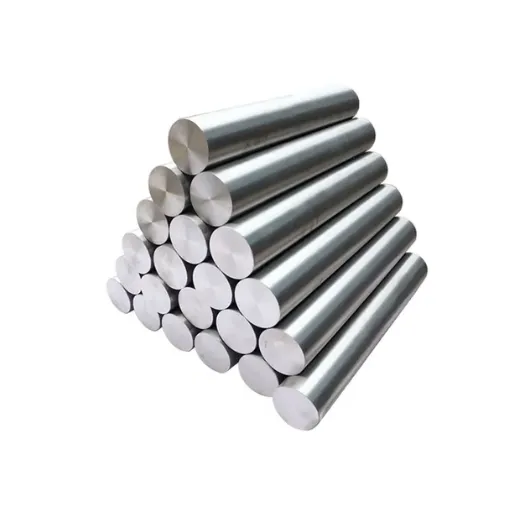
A titanium hex bar has six exterior flats. The usual section dimension is across flats, meaning the distance between two opposite parallel flats. This measurement is different from a round-bar diameter and should be written plainly in the inquiry with its unit and tolerance.
Across-flats size is only one part of the requirement. It does not state the grade, condition, straightness, end treatment, surface, length, document scope, or inspection conditions. If any of those items are relevant to machining or receiving, the buyer should include them before comparing quotations.
Write the section dimension without ambiguity
Use “across flats” or the abbreviation used in the controlled drawing. Give the nominal value, unit, and the exact tolerance or tolerance class required. If a drawing controls corner form, profile, chamfer, surface, or straightness, attach it and identify the revision. Do not assume that a supplier will interpret “hex size” in the same way as the receiving or machining team.
For a titanium hex bar, it can also help to state which dimensions are critical to the finished part and which are only stock allowances. That distinction lets the supplier identify questions early without the buyer turning a provisional assumption into an implied acceptance condition.
Illustrative scenario: “12 mm hex” needed context
An illustrative buyer requests “12 mm titanium hex bar” for a batch of parts. One supplier asks whether 12 mm is the distance across flats; another asks for a tolerance; a third assumes a standard-length bar. The buyer revises the request to include across flats, units, length, tolerance, drawing revision, surface, quantity, and document needs. Each supplier can now review the same scope.
Keep a product label separate from a supply commitment
Supplier pages can show photos, listed sizes, grades, surfaces, documents, or application examples. Those statements belong to the individual supplier. They do not establish that another seller has the same form, route, inventory, tolerances, documentation, or commercial terms.
Treat general product information as a prompt for questions. Ask the supplier to identify what can be reviewed against the actual titanium hex bar requirement, what is missing, and what assumptions would apply. This creates a written basis for a later commercial comparison.
State Grade, Standard, and Project Controls
Grade and standard references help organize a titanium hex bar RFQ, but they do not replace the purchase requirement. The public page for ASTM B348/B348M-21 states that the specification covers annealed titanium and titanium-alloy bars and billets. A buyer should use that fact to check terminology, then state the specific project reference and edition where it applies.
Use the grade named by the project
State the material designation exactly as the drawing, purchase order, or customer specification requires. If the project gives a grade, UNS designation, or other alloy designation, reproduce it clearly. Do not replace it with a general titanium term or infer an acceptable alternative from a catalogue.
If the project documents appear to conflict, identify the discrepancy before requesting a final quotation. For example, a drawing may give a grade while an older purchase record lists a different standard revision. The buyer should ask the responsible project owner to establish the controlling requirement.
Make a standard reference operational
When ASTM B348 is required, state the exact edition and list every project-specific addition. The ASTM nonferrous metal standards index can help readers locate the appropriate standards family. It does not select the correct route for a project and does not prove that any seller has accepted the requirement.
The ASTM public abstract names descaled, sandblasted, ground, and rough turned as possible furnished conditions for covered annealed material. These are standard-level terms, not a list of conditions offered by Fengyao or a default specification for every titanium hex bar. State the required surface and delivered condition, or record the item as pending confirmation.
Illustrative scenario: a revision changed the request
An illustrative purchasing team uses an old standard reference in a titanium hex bar RFQ. The engineering team checks the current drawing and finds an updated edition plus a document requirement that was not in the old order. The buyer updates the RFQ, attaches the correct revision, and asks suppliers to note exceptions. The resulting quotations are based on current information instead of a copied historical description.
Leave material selection to the accountable team
This guide explains how to communicate a hex-bar requirement. It does not select material for medical, aerospace, chemical, marine, or other controlled applications. The responsible engineer and governing project documents should define the material, condition, testing, and acceptance criteria before sourcing begins.
Define Across Flats, Length, Tolerance, and Condition
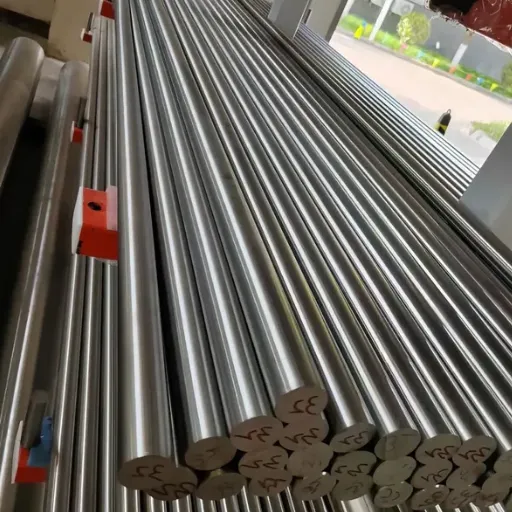
The core of a titanium hex bar request is a set of measurable controls. Start with across flats, then add the length, any length tolerance, straightness when relevant, end condition, surface requirement, delivered condition, and quantity. Use one unit system consistently or identify the controlling unit where both are shown.
Describe the section and profile notes
Give the across-flats value with its tolerance. If the drawing includes a corner-radius, chamfer, profile, or measurement-method requirement, identify the clause or attach the drawing. A purchasing message should not try to simplify a critical profile control into a vague word such as “standard.”
If the stock will be machined, the responsible team should state any required allowance rather than assuming it. An allowance, a surface requirement, and a finished dimension are distinct instructions. Keeping them separate helps a supplier understand what is being requested without guessing the next manufacturing step.
State length and condition in the same RFQ
Specify the required length and length tolerance. If several lengths are acceptable, list the permitted alternatives or the selection rule. State whether ends need a particular condition, or mark the item as open. The same discipline applies to straightness: if it matters to the project, define it; if it is unresolved, ask for confirmation rather than silently assuming a default.
Surface and delivered condition also belong in the original request. The buyer should state the project requirement, identify the governing document, and ask suppliers to confirm it against the proposed scope. Do not carry a condition from one supplier's web page into another seller's quotation.
Illustrative scenario: the comparison sheet found omissions
An illustrative buyer receives three titanium hex bar responses. The first includes an across-flats value but no tolerance, the second lists a length but no end condition, and the third gives a price without document information. The buyer issues a one-page requirement sheet covering the section, tolerances, length, surface, quantity, and documents. The next replies can be assessed field by field.
Add drawings and quantity information
Attach the latest drawing revision whenever its notes define the material or geometry. State the quantity in pieces and, where useful, total mass. Tell the supplier whether the purchase needs a single length, multiple lengths, or a stated cut arrangement. These details keep a titanium hex bar offer from being compared on an unknown quantity basis.
For context about the store, see Fengyao's company profile. The site presents the company as a trading company, which is why each order condition should be reviewed and confirmed rather than inferred from a general product-family description.
| RFQ field | State it this way |
|---|---|
| Section | Across-flats value, unit, and tolerance |
| Geometry | Drawing revision and any profile notes |
| Supply scope | Length, condition, surface, quantity, and documents |
Put Inspection and Documents in the First Request
Inspection and documentation requirements should be named at the same time as the section dimensions. “Certificate required” can mean many different things. Instead, list every report, record, inspection item, identification need, or approval document that the project requires.
Request each item by name
For every requested document, state the controlling specification or clause and the revision where relevant. Say whether it must be reviewed before release, supplied with delivery, or retained for receiving. If a particular inspection or test is needed, name it and ask whether it can be addressed for the proposed order.
Do not assume that a supplier will provide a material test report, traceability record, third-party inspection, certificate, marking, or special packing. Request the item explicitly and obtain order-specific confirmation. That avoids a buyer treating a broad quality statement as an agreed acceptance package.
Track changes in one place
Keep the RFQ, drawings, supplier questions, replies, and clarifications together. When an item changes, give it a revision reference and ask whether the change affects scope, price, documentation, or timing. This is especially helpful when several purchasing contacts are collecting titanium hex bar quotations at the same time.
The video below is general terminology orientation only. It is not evidence of Fengyao inventory, manufacturing, inspection, or capability.
Compare Titanium Hex Bar Quotes on One Basis
Price is useful only after technical scope is aligned. A lower number may cover a different across-flats tolerance, length, condition, document scope, packing assumption, or quantity basis. Use a requirements matrix to keep each reply visible against the same request.
Build a quote-comparison matrix
Create rows for the material designation, standard and edition, across-flats size, tolerance, profile notes, length, straightness, end condition, surface, delivered condition, quantity, inspection, documents, packaging, destination, price basis, and assumptions. Mark each row as confirmed, different, excluded, or pending clarification.
When a supplier proposes an alternative, put it in a separate deviation column. The responsible buyer or engineer can then decide whether the alternative is acceptable. Do not blend an alternative into the original titanium hex bar specification just because it appears in a quotation.
Confirm commercial assumptions
Check whether pricing is based on pieces, length, or mass and whether the requested quantity is the same in every response. Ask how any relevant packaging, freight terms, taxes, and timing assumptions are treated. These questions do not presume a price or delivery commitment; they make the decision basis clear.
When the requirement is complete, submit it to contact Fengyao and ask for a review of the stated scope, missing fields, and proposed assumptions. This is a practical next step without promising stock, pricing, documents, or a delivery result.
Copy-and-Send Titanium Hex Bar RFQ
Replace the bracketed fields below with the actual requirement. If a detail remains undecided, write “to be confirmed” and identify the responsible person or controlling document.
Product: titanium hex bar
Material designation / grade: [state project requirement]
Applicable standard and edition: [state governing requirement]
Across-flats size: [value, unit, and tolerance]
Corner or profile notes: [drawing requirement or “to be confirmed”]
Length: [required length and length tolerance]
Straightness / end condition: [state requirement or “to be confirmed”]
Surface and delivered condition: [state requirement]
Quantity: [pieces and/or total mass]
Drawing or revision: [attach if applicable]
Inspection and documentation: [list every requirement]
Destination, packaging, and requested timing: [state]
Open technical or commercial items: [list for confirmation]
Before sending
Confirm that the drawing revision is current, the unit system is consistent, and every critical tolerance is readable. Add relevant customer clauses and make sure each supplier receives the same RFQ version. This creates a reliable basis for comparison even when the suppliers answer in different formats.
The Xi'an Fengyao Technology Co., Ltd. storefront provides a starting point for its listed titanium product families. Send the completed titanium hex bar requirement through contact Fengyao and request confirmation of technical scope, document needs, commercial basis, and open items.
Frequently asked questions
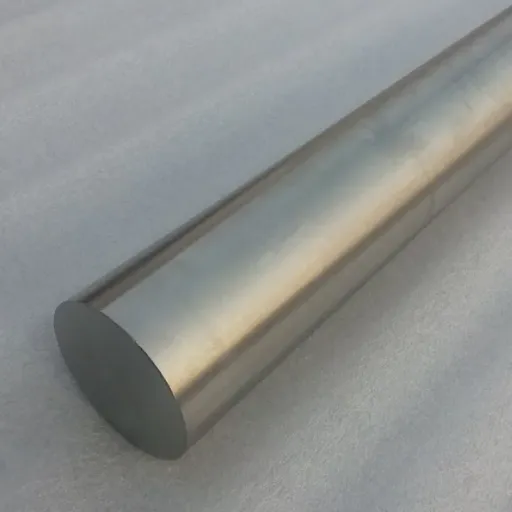
How is a titanium hex bar sized?
State the distance across opposite parallel flats, usually called across flats, along with the unit and tolerance. Add drawing notes when the profile or corners are controlled.
Is an across-flats value enough for an RFQ?
No. Include grade, standard and edition where required, length, length tolerance, straightness, ends, surface, delivered condition, quantity, drawings, inspections, documents, and destination information.
Does ASTM B348 define the entire order?
Only when it is the applicable governing reference, and even then the buyer should state the edition and all project-specific drawing, condition, inspection, and documentation requirements.
How should I request documents?
Name each required document or record, identify the governing clause and revision, state when it is needed, and request order-specific confirmation from the supplier.
Can I request a titanium hex bar before every detail is fixed?
Yes. List open items as “to be confirmed,” identify the document owner, and ask the supplier to state assumptions rather than treating them as settled requirements.
Final note
A complete titanium hex bar RFQ protects the comparison process. It does not establish availability, price, tolerance, document scope, standards compliance, or delivery until those details are confirmed against the actual requirement. Use the checklist, attach the controlled documents, and keep unresolved items visible.
Recently Posted
-
Seamless vs Welded Titanium Tube: Compare Form, Standard, and Inspection
September 23, 2026The practical answer to seamless vs welded titanium tube is that neither route is automatically the right choice. Seamless and wel Read More
 -
Titanium Tube vs Pipe: Choose the Right Dimensional Language
September 23, 2026The practical difference in a titanium tube vs pipe request is usually the dimensional convention: tube is commonly specified by e Read More
 -
Thin Wall Titanium Tubing: Build a Specification-Ready RFQ
September 23, 2026Thin wall titanium tubing should be specified by its grade, standard, form, OD, ID when relevant, wall thickness, tolerances, oval Read More
 -
Titanium Bar for Machining: Build a Better Stock RFQ
September 22, 2026When buying titanium bar for machining, state the grade, condition, stock form, dimensions, tolerance, machining allowance, straig Read More

Contact Us
Recommended Products
-
 Titanium Alloy Plate Gr5 Gr7 Gr9 Gr12 Gr23 Cold Rolled Titanium Sheet Custom SizeNegotiableMOQ: 1 Ton
 -
Gr2 Titanium Alloy Rod Pickled Surface Hexagonal Titanium Bar Custom CuttingUS$ 20 - 40MOQ: 100 Kilograms
-
Grade1 Pure Titanium Wire ASTM B863 Standard Spool Titanium Wire Custom DiameterNegotiableMOQ: 100 Kilograms
-
Grade 2 Seamless Titanium Tube ASTM B338 Titanium Pipe Custom Length Pickled Surface Titanium TubingUS$ 20 - 40MOQ: 100 Kilograms
-
1mm Titanium Sheet Hot Rolled Titanium Plate Support Waterjet And CNC CuttingUS$ 20 - 40MOQ: 100 Kilograms
-
Thin Titanium Fine Wire Pickled Surface Titanium Wire Custom Diameter ToleranceNegotiableMOQ: 100 Kilograms
-
Titanium Round Bar Stock Gr1 Pure Titanium Rod Multiple Shape SelectionUS$ 20 - 40MOQ: 100 Kilograms
-
High-Temperature Alloy 800 Nickel-Iron-Chromium Tubing for Industrial ApplicationsUS$ 20 - 40MOQ: 100 Kilograms
-
Gr5 Ti Aluminum Vanadium Wire Titanium Welding Wire AWS A5.16 ComplianceNegotiableMOQ: 100 Kilograms
-
Gr23 Titanium Rod Annealed Condition Custom Length Titanium Bar UT Inspection AvailableUS$ 20 - 40MOQ: 100 Kilograms
-
CP Grade4 Titanium Alloy Rod Rolled Process Hex Titanium Bar Industrial ApplicationUS$ 20 - 40MOQ: 100 Kilograms
-
1 Inch 2 Inch Titanium Tubing Seamless Titanium Pipe Custom Cutting Titanium Tube For EngineeringUS$ 20 - 40MOQ: 100 Kilograms
-
4x8 Titanium Sheet Pure Titanium Plate Mill Finish Surface Cold Rolled Titanium SheetUS$ 20 - 40MOQ: 100 Kilograms
-
2mm Titanium Alloy Sheet Polished Titanium Plate For Chemical Corrosion ResistanceUS$ 20 - 40MOQ: 100 Kilograms
-
Custom Cut Titanium Plate Titanium Alloy Sheet With CNC Waterjet Shearing ProcessingNegotiableMOQ: 1 Ton
-
3mm Titanium Round Bar Gr2 Titanium Rod Strict Diameter Tolerance ControlUS$ 20 - 40MOQ: 100 Kilograms
-
Titanium Hypodermic Tubing Micro Thin Wall Titanium Tube Custom Tolerance Titanium PipeUS$ 20 - 40MOQ: 100 Kilograms
-
Titanium Grade2 Seamless Pipe Thin Wall Titanium Tubing Custom Length Titanium TubeUS$ 20 - 40MOQ: 100 Kilograms
-
2mm Titanium Alloy Wire Polished Surface Spool Packed Titanium WireNegotiableMOQ: 100 Kilograms
-
Ti-6Al-4V Titanium Alloy Sheet Grade Gr5 Titanium Plate For Aerospace ApplicationUS$ 20 - 40MOQ: 100 Kilograms