
 Business License

Titanium Tube Wall Thickness: How to Specify, Compare, and Inspect It
Titanium tube wall thickness must be specified with the outside diameter, tolerance, grade, product form, standard, length, inspection, and drawing requirements. A wall value on its own does not establish a safe design, a compliant product, or a comparable quotation; the responsible engineer and governing project documents determine the wall needed for the actual service.
That may sound more careful than a quick “use this wall” answer, but it is how a procurement team avoids a costly mismatch. Wall thickness affects the nominal inside diameter and is part of a dimensional-control system. This guide explains how to read titanium tube wall thickness, use published tables correctly, and prepare an RFQ that gives every supplier the same information.
Key takeaways
Titanium tube wall thickness is only one required dimensional field; OD, length, tolerance, grade, form, standard, and inspection complete the request.
Nominal wall, actual wall, minimum wall, and allowed tolerance are related but distinct ideas.
The geometric formula is ID = OD − 2 × wall; acceptance still depends on the specified tolerances.
ASTM B338 covers 28 grades of seamless and welded titanium and titanium-alloy tubes for listed heat-exchanger service.
Pressure, temperature, fluid, code, and safety decisions belong to the responsible engineer and project documents, not a generic web chart.
For a specification-led request, start with Fengyao’s titanium tube and pipe category and send the full technical requirement through contact Fengyao.
What titanium tube wall thickness means
Nominal wall, actual wall, and minimum wall
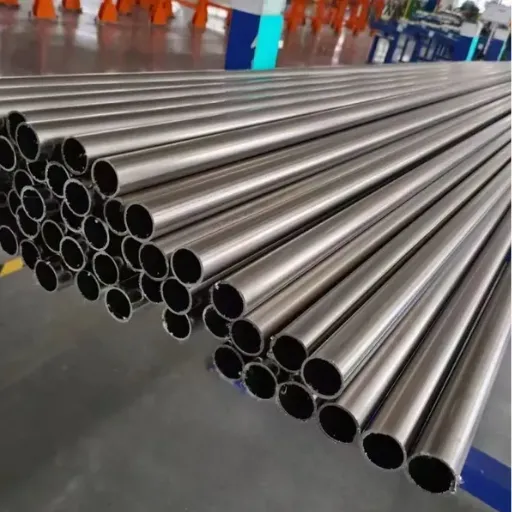
Titanium tube wall thickness usually starts with a nominal value written next to the OD. For example, OD 25 mm × 1.5 mm wall gives a nominal geometry that a drawing or order can build upon. It does not, by itself, state the allowed variation in the delivered product.
Actual wall is the measured value at a particular inspection location. Minimum wall is an acceptance concept only when the governing standard, drawing, or purchase order defines it. A buyer should not assume that “nominal wall” guarantees the same minimum requirement across all standards, grades, manufacturers, or applications.
Tolerance states the permitted variation. It may be expressed as a percentage, a plus/minus value, a one-sided limit, or a drawing-defined requirement. Titanium tube wall thickness should therefore be accompanied by the tolerance basis and any required measurement method or inspection record.
The OD, wall, and ID relationship
For nominal geometry, inside diameter is calculated as:
ID = OD − 2 × wall
In an Illustrative scenario, a tube with 25 mm OD and 1.5 mm nominal wall has a nominal calculated ID of 22 mm. This is a geometry example only. If the OD and wall have permitted variation, the accepted ID outcome follows the dimensions and tolerance rules stated in the project documentation.
The calculation also explains why wall cannot be evaluated in isolation. Changing the wall changes the nominal ID while OD remains fixed. Where flow area, fit, machining, bending, or another functional feature matters, the drawing should identify the controlled dimensions and tolerances.
Wall thickness is more than a number in a catalog
Published tables can help a buyer understand how a specific manufacturer describes its own tubing. They do not establish the accepted wall for another supplier, and they do not select the wall for a real service condition. Product form, grade, OD, length, manufacturing route, standard edition, and inspection requirements all affect the procurement discussion.
Illustrative scenario: An inquiry reads “need 1 mm titanium wall.” The supplier cannot compare the requirement until it also has OD, length, grade, form, applicable standard, tolerance, quantity, and quality requirements. The missing fields may change both the product definition and the quote.
For broader item navigation, see the titanium product range. Actual dimensions, availability, and technical conditions should be confirmed against a complete inquiry.
Why titanium tube wall thickness is not a standalone selection rule
Engineering conditions and governing codes
Wall selection is an engineering decision, not a catalog lookup. The Titanium Industries pipe and tube training material states that wall thickness selection depends primarily on the capacity to resist internal pressure under given conditions and that the design engineer should calculate the exact wall for the governing construction code.
That boundary is important. Pressure, temperature, fluid, corrosion environment, fatigue, joining method, allowance, code, loading, and safety factors can all matter. This article does not calculate or recommend titanium tube wall thickness for an application; those decisions must be made by the responsible engineer using the project’s controlled inputs.
When a buyer receives a wall recommendation that is not tied to the drawing, design basis, and applicable code, treat it as an open question rather than a design approval. Record the question in the RFQ so the engineering team can resolve it.
Tube versus pipe notation
Tube orders commonly state OD and wall thickness. Pipe orders may use nominal pipe size (NPS) and schedule. These are different notation systems, so a buyer should not convert one into the other informally.
Titanium Industries illustrates the pipe principle with a 1.000-inch NPS example: the nominal pipe OD remains 1.315 inches while the wall and approximate ID differ across schedule examples. The illustration explains why a schedule is not simply a name for a generic tube wall. It is not a size offer, an availability statement, or a design rule for Fengyao products.
If a drawing says “tube” but the inquiry lists NPS and schedule, request clarification before quotation. Confirm the controlling product definition, standard, grade, form, length, tolerance, testing, and documentation.
Thickness, ratio, and manufacturability questions
Purchasers may hear terms such as “thin wall,” “heavy wall,” or “OD-to-wall ratio.” These terms are useful prompts for a technical review, but they are not universal acceptance categories. The permitted ratio, forming route, straightness, ovality, surface, and inspection plan depend on the specific material and order.
Do not use a generic ratio to promise manufacturability. Instead, ask the supplier to identify any dimensional limitation or deviation in writing and submit it for project review. This turns an informal label into a traceable quotation field.
Standards, product form, and wall requirements
ASTM B338 context
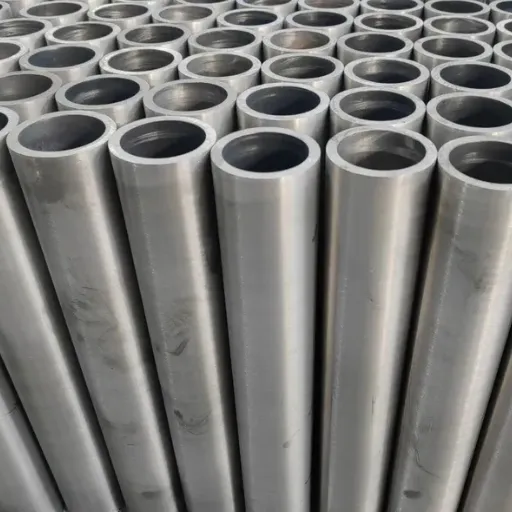
ASTM B338 covers 28 grades of seamless and welded titanium and titanium-alloy tubes intended for surface condensers, evaporators, and heat exchangers. Its public abstract describes seamless tube made from hollow billet through cold reducing or cold drawing and welded tube made from flat-rolled product through automatic arc welding, followed by cold work to final size.
This standard context shows why titanium tube wall thickness must be read with the product form and order requirements. A nominal wall may be the same on a drawing while the required standard, grade, manufacturing form, inspection, and records differ. The selected standard and current project edition control the order.
ASTM B338 also describes examination and testing provisions for its covered products. Do not turn that into a blanket promise that every tube or every quote includes the same tests. The RFQ must state the required tests, sampling, acceptance criteria, and document set.
Grade, edition, and drawing revision
The wall callout should travel with a material designation and standard edition. Grade cannot be inferred from dimensions. The same is true of seamless or welded form; it must be named where the project controls it.
Include the drawing number and revision. A change in wall, tolerance, end condition, or inspection note can materially change the product definition even if the OD stays the same. A quotation against an obsolete drawing may appear complete while failing the current requirement.
Illustrative scenario: A purchaser has a drawing that specifies a tight wall tolerance but omits the document requirements. The engineering team adds the revision-controlled inspection plan and required records before requesting quotes. The result is a comparison based on the same acceptance conditions, not only the same nominal wall.
Read wall tolerance tables without overgeneralizing
Manufacturer examples versus project requirements
Technical tables are useful only when their source and scope remain visible. Haynes’ titanium technical data includes a commercial B338 OD/wall table that lists ±10% nominal-wall tolerance in the table. It also lists diameter tolerance examples from ±0.102 mm below 25.4 mm OD through ±0.254 mm in its 63.5–88.9 mm OD band.
Those values are published manufacturer examples. They are not universal tolerances, a substitute for the current standard text, or a statement of Fengyao capability. Use them to understand why the RFQ should identify both the nominal wall and the applicable tolerance requirement.
The exact wording matters. “±10% wall” and “minimum wall” are not automatically interchangeable. A buyer should use the requirement written in the governing standard, drawing, or project specification and ask for clarification when terms conflict.
Inspection fields that belong with wall thickness
When wall thickness is important, the RFQ should identify how the dimension will be checked and what records are required. Depending on the order, useful fields can include measurement location, frequency, tolerance, sampling, inspection method, acceptance criteria, and report format. Do not assume any one inspection approach applies to every titanium tube.
Also include related dimensions when they affect acceptance: OD, ID if controlled, ovality, straightness, eccentricity, length, end condition, and surface requirement. This prevents a quote from meeting a wall number while missing another critical drawing feature.
Compare titanium tube wall thickness in an RFQ
Quote comparison matrix
Use one matrix for every supplier. It helps the team spot a missing tolerance, different standard edition, or unlisted deviation before price becomes the deciding field.
| Field | Requirement to state | Buyer review question |
|---|---|---|
| Product form | Tube/pipe; seamless, welded, or drawing-defined | Does it match the drawing? |
| Material | Grade or material designation | Is the exact grade stated? |
| Standard | Number and edition | Does it govern this product? |
| Dimensions | OD, wall, ID if controlled, units | Are all controlled values included? |
| Tolerance | OD, wall, length, and related tolerances | Is the acceptance basis explicit? |
| Delivery | Length, ends, surface, condition | Are delivery details complete? |
| Quality | Tests, identification, reports | Does it meet the project plan? |
| Deviations | Any alternate proposal | Has engineering reviewed it? |
Copy-and-send RFQ template
Product: titanium tube [seamless / welded / welded and drawn / project-defined]
Material designation / grade:
Applicable standard and edition:
OD / ID / nominal wall: [value, unit, tolerance]
Length and length tolerance:
Ovality / straightness / eccentricity / ends:
Surface and delivery condition:
Inspection, acceptance criteria, and required documents:
Drawing number and revision:
Quantity, destination, packing, timing, and open items:
This template asks for a complete technical definition without promising a stock size, test, certificate, price, or delivery term. For storefront context, see Fengyao’s company profile, then use contact Fengyao to submit the RFQ.
Three illustrative quote-review scenarios
A wall-only request
Illustrative scenario: A buyer requests 1.2 mm wall for titanium tubing. The purchasing team asks for OD, length, grade, standard, tolerance, form, quantity, and records. The corrected RFQ allows offers to be compared on the same technical basis.
A thin-wall drawing with open quality notes
Illustrative scenario: A drawing identifies OD and a thin wall but does not define the inspection records. The buyer asks the responsible engineer to specify the acceptance criteria, measurement approach, and required reports. This avoids treating a nominal wall callout as a complete quality plan.
A schedule request with mixed terminology
Illustrative scenario: A request says “titanium tube, NPS 1, schedule 40.” The team confirms whether the project intends pipe, identifies the governing dimensional standard, and adds form, grade, length, inspection, and drawing revision. Only then does it request a quote.
FAQ about titanium tube wall thickness
How do I calculate inside diameter from wall thickness?
For nominal geometry, subtract twice the wall from the OD: ID = OD − 2 × wall. Use drawing and tolerance requirements for accepted dimensions where ID is critical.
Is ±10% always the titanium tube wall tolerance?
No. Haynes publishes ±10% in one commercial B338 OD/wall table, but that is an example from a specific source. The applicable standard, edition, drawing, and purchase order determine the actual requirement.
Who selects the required titanium tube wall thickness?
The responsible engineer selects or approves the required wall using the actual service conditions and governing code or project rules. Purchasing should collect and preserve that decision in the RFQ.
What should I include with a wall-thickness inquiry?
Include product form, grade, standard edition, OD, wall, controlled ID if applicable, tolerance, length, surface, ends, inspection, documents, drawing revision, quantity, and delivery information.
Can Fengyao confirm a requested wall thickness?
Submit the complete RFQ through the Fengyao contact page. The storefront does not by itself confirm available walls, stock, standards compliance, testing, certification, or lead time; those details require review against the actual request.
Conclusion
Titanium tube wall thickness becomes a usable purchasing requirement only when it is connected to OD, tolerances, material, product form, standard, length, inspection, and a controlled drawing. Do not select a wall from a general web table for an operating condition. Send the complete specification to Xi'an Fengyao Technology Co., Ltd. so the requested dimensions and open requirements can be reviewed together.
Recently Posted
-
Titanium Tube Sizes: OD, Wall Thickness, Length, and RFQ Fields
September 30, 2026Titanium tube sizes are normally defined by outside diameter, wall thickness, and length, then completed with grade, product form, Read More
 -
Seamless vs Welded Titanium Tube: Compare Form, Standard, and Inspection
September 23, 2026The practical answer to seamless vs welded titanium tube is that neither route is automatically the right choice. Seamless and wel Read More
 -
Titanium Tube vs Pipe: Choose the Right Dimensional Language
September 23, 2026The practical difference in a titanium tube vs pipe request is usually the dimensional convention: tube is commonly specified by e Read More
 -
Thin Wall Titanium Tubing: Build a Specification-Ready RFQ
September 23, 2026Thin wall titanium tubing should be specified by its grade, standard, form, OD, ID when relevant, wall thickness, tolerances, oval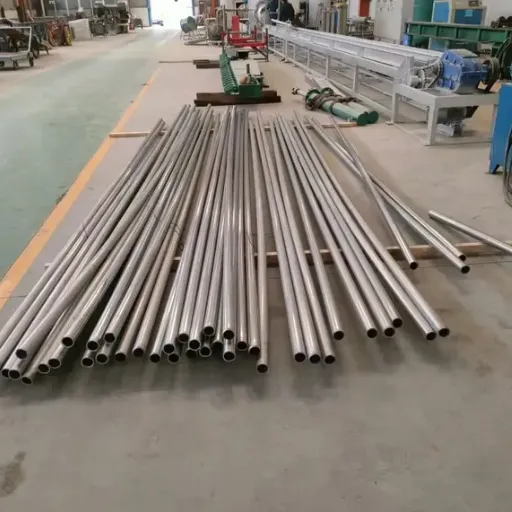 Read More

Contact Us
Recommended Products
-
 Titanium Alloy Plate Gr5 Gr7 Gr9 Gr12 Gr23 Cold Rolled Titanium Sheet Custom SizeNegotiableMOQ: 1 Ton
 -
Gr2 Titanium Alloy Rod Pickled Surface Hexagonal Titanium Bar Custom CuttingUS$ 20 - 40MOQ: 100 Kilograms
-
Grade1 Pure Titanium Wire ASTM B863 Standard Spool Titanium Wire Custom DiameterNegotiableMOQ: 100 Kilograms
-
Grade 2 Seamless Titanium Tube ASTM B338 Titanium Pipe Custom Length Pickled Surface Titanium TubingUS$ 20 - 40MOQ: 100 Kilograms
-
1mm Titanium Sheet Hot Rolled Titanium Plate Support Waterjet And CNC CuttingUS$ 20 - 40MOQ: 100 Kilograms
-
Thin Titanium Fine Wire Pickled Surface Titanium Wire Custom Diameter ToleranceNegotiableMOQ: 100 Kilograms
-
Titanium Round Bar Stock Gr1 Pure Titanium Rod Multiple Shape SelectionUS$ 20 - 40MOQ: 100 Kilograms
-
High-Temperature Alloy 800 Nickel-Iron-Chromium Tubing for Industrial ApplicationsUS$ 20 - 40MOQ: 100 Kilograms
-
Gr5 Ti Aluminum Vanadium Wire Titanium Welding Wire AWS A5.16 ComplianceNegotiableMOQ: 100 Kilograms
-
Gr23 Titanium Rod Annealed Condition Custom Length Titanium Bar UT Inspection AvailableUS$ 20 - 40MOQ: 100 Kilograms
-
CP Grade4 Titanium Alloy Rod Rolled Process Hex Titanium Bar Industrial ApplicationUS$ 20 - 40MOQ: 100 Kilograms
-
1 Inch 2 Inch Titanium Tubing Seamless Titanium Pipe Custom Cutting Titanium Tube For EngineeringUS$ 20 - 40MOQ: 100 Kilograms
-
4x8 Titanium Sheet Pure Titanium Plate Mill Finish Surface Cold Rolled Titanium SheetUS$ 20 - 40MOQ: 100 Kilograms
-
2mm Titanium Alloy Sheet Polished Titanium Plate For Chemical Corrosion ResistanceUS$ 20 - 40MOQ: 100 Kilograms
-
Custom Cut Titanium Plate Titanium Alloy Sheet With CNC Waterjet Shearing ProcessingNegotiableMOQ: 1 Ton

-
3mm Titanium Round Bar Gr2 Titanium Rod Strict Diameter Tolerance ControlUS$ 20 - 40MOQ: 100 Kilograms
-
Titanium Hypodermic Tubing Micro Thin Wall Titanium Tube Custom Tolerance Titanium PipeUS$ 20 - 40MOQ: 100 Kilograms
-
Titanium Grade2 Seamless Pipe Thin Wall Titanium Tubing Custom Length Titanium TubeUS$ 20 - 40MOQ: 100 Kilograms
-
2mm Titanium Alloy Wire Polished Surface Spool Packed Titanium WireNegotiableMOQ: 100 Kilograms
-
Ti-6Al-4V Titanium Alloy Sheet Grade Gr5 Titanium Plate For Aerospace ApplicationUS$ 20 - 40MOQ: 100 Kilograms