
 Business License

Grade 2 Titanium Wire: Specify UNS R50400, Diameter, Form, and Documents
Grade 2 titanium wire should be ordered as UNS R50400 with the applicable standard, diameter, tolerance, delivery form, surface, condition, documents, and drawing requirements. The grade identifies the material, but a complete order line also needs to say whether the wire is straight, coiled, or on a spool, how its diameter is accepted, and which records must accompany it.
A short request such as “Grade 2 wire, 1 mm” leaves important questions unanswered. It does not establish the standard edition, tolerance, surface, packaging, document package, or any application approval. This guide turns that short description into a quote-ready specification.
Key takeaways
ASTM B863 lists Grade 2 as UNS R50400 and as unalloyed titanium.
Grade 2H is also UNS R50400 but has a separately stated 58 ksi (400 MPa) minimum UTS requirement; do not substitute it without project approval.
Diameter, units, tolerance, form, length, surface, and documents belong in every Grade 2 titanium wire RFQ.
ASTM B863, a filler-metal reference, a regulated-use reference, and a customer drawing may have different scopes.
Certifications, availability, delivery, and application suitability require confirmation against the actual order.
Start a specification-led inquiry through Fengyao’s titanium wire category and provide the full requirements through contact Fengyao.
What Grade 2 titanium wire means
Grade 2, UNS R50400, and unalloyed titanium
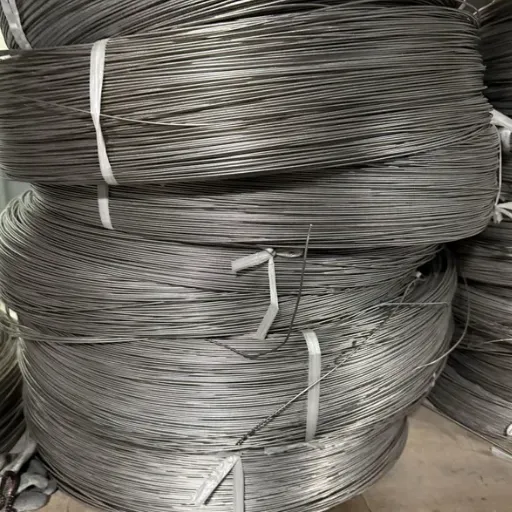
ASTM B863 covers titanium and titanium-alloy wire. Its scope identifies Grade 2 as UNS R50400 and as unalloyed titanium. The same standard states that it details chemical composition, density, tensile strength, elongation, and hardness.
This is a material identity, not a complete purchasing specification. The buyer still has to define the wire form, dimensions, tolerance, surface, condition, inspection, documents, and order-specific acceptance requirements. Use the current standard edition and project documents before issuing the purchase order.
Grade 2 versus Grade 2H
ASTM B863 separately identifies Grade 2H as UNS R50400 and describes it as Grade 2 with a 58 ksi (400 MPa) minimum UTS. This does not mean a Grade 2 order can automatically accept Grade 2H, or that a Grade 2H order can be simplified to Grade 2. The order must name the required grade designation and any controlled mechanical requirements.
Illustrative scenario: A buyer requests “R50400 wire” and a quote uses Grade 2H language. The buyer asks the engineering team to confirm the intended grade designation, governing standard edition, mechanical requirement, and acceptable certification before comparing price.
Define Grade 2 titanium wire before quoting
Diameter, units, and tolerance
State the nominal diameter, unit, and permitted tolerance. A historical B863 copy includes a table titled “Permissible Variations in Size for Titanium Wire,” which shows that tolerance is specification-controlled. It should not be used in place of the current edition or a project drawing.
Where the diameter is critical, also identify the required measurement method, sampling, acceptance criterion, and record. Do not treat a nominal diameter as a guaranteed maximum, minimum, or bilateral tolerance.
Straight, coil, spool, and cut length
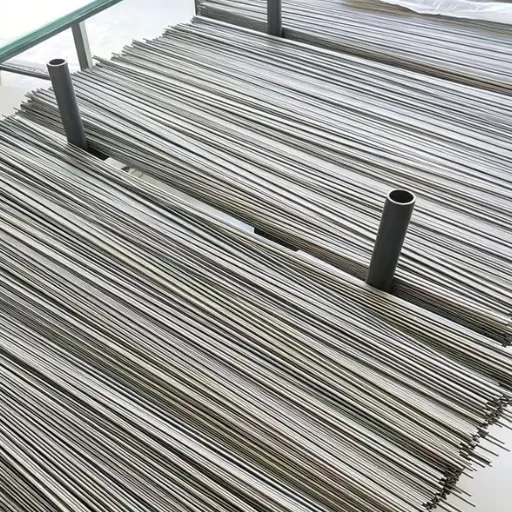
The same diameter may represent different order lines when supplied as straight wire, coil wire, or wire on a spool. The Beiyu wire-form guide usefully separates form from diameter and standard, but its published size ranges are supplier-specific.
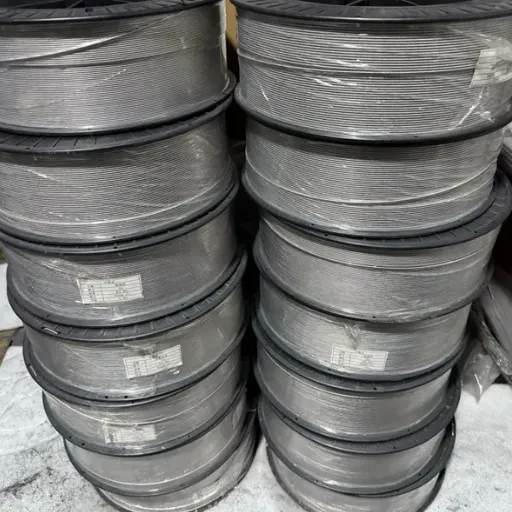
An RFQ should state delivery form, length or coil quantity, cut-length tolerance, packaging, and quantity basis. It should also say whether a drawing requires a specific feed, handling, or end condition. These fields support the quote; they are not claims that every form is available.
Surface and delivery condition
Surface, condition, marking, and packing should be written as controlled requirements whenever they matter. Avoid phrases such as “good finish” or “standard surface,” which lack an acceptance basis. State the drawing note, applicable standard, cleanliness condition, or protected-packing instruction instead.
Illustrative scenario: A production team asks for 1.2 mm Grade 2 titanium wire on a spool, while a drawing requires straight cut pieces. The buyer corrects the delivery form, cut length, tolerance, surface, package, and quantity fields before seeking revised quotations.
Standards and drawings that control Grade 2 titanium wire
ASTM B863 and edition control
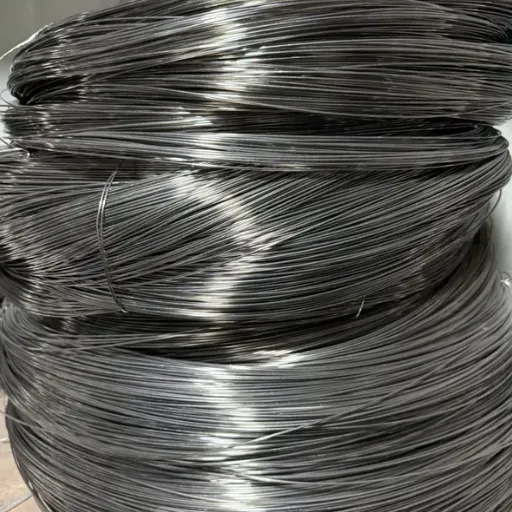
ASTM B863 is the core reference for Grade 2 titanium wire. The standard identifier and edition should be written in the RFQ, together with any customer or project specification. If the project does not name an edition, mark it as an open technical item rather than allowing suppliers to make incompatible assumptions.
The historical B863-14 PDF confirms the Grade 2 / UNS R50400 relationship in an older edition. It is helpful for terminology, but only the current official standard and order documents should control procurement.
Filler-metal, regulated-use, and drawing references
Some wire projects include a filler-metal reference, a regulated-use material reference, or a customer drawing. These documents are not automatically interchangeable with ASTM B863. They may control different material, condition, testing, document, approval, or packaging requirements.
List every controlling reference separately and identify the hierarchy. Do not claim that Grade 2 titanium wire is suitable for welding, medical, marine, chemical, or any other service merely because a competitor page associates it with that use. The responsible engineering or quality organization must approve application-specific requirements.
Surface, inspection, and documents
Define the delivered condition
The order should name any required surface, delivered condition, straightness, coil state, cut ends, cleanliness, marking, or packing condition. If a condition is not specified, do not fill the gap with a generic catalog term. Ask the project team to define the acceptance criterion.
Grade 2 titanium wire can also need dimensional or visual verification depending on the order. State which properties are to be checked, how they are accepted, and what report is required. The storefront does not establish inspection capability, so request written confirmation only after the full scope is submitted.
Documents and traceability
Specify the exact documents needed: for example, material record, dimensional report, heat or lot reference, conformity statement, label, or project form. A certificate title by itself may not demonstrate the required diameter, delivery form, surface, or application-specific condition.
State how product and records must link. When a customer requires third-party witness, special inspection, or defined record retention, include the witness scope, criteria, notification period, and document package in the RFQ.
For company background, see the company profile. Submit the wire and document requirements together through contact Fengyao.
Compare Grade 2 titanium wire quotes
| Field | Requirement to state | Review question |
|---|---|---|
| Material | Grade 2 / UNS R50400 or Grade 2H if required | Is the designation exact? |
| Standard | ASTM B863 edition and other references | Which document controls? |
| Diameter | Nominal size, unit, tolerance | Is the acceptance basis explicit? |
| Form | Straight, coil, spool, or cut length | Does it match production needs? |
| Condition | Surface, ends, packaging, marking | Is it drawing-controlled? |
| Documents | Records, heat/lot linkage, inspection | Do they meet the order? |
| Deviations | Alternatives or open items | Has the project approved them? |
Compare scope before price. A lower offer may reflect a different tolerance, form, packaging, document set, or unlisted deviation. Ask each supplier to respond to the same RFQ fields.
Copy-and-send Grade 2 titanium wire RFQ
Product: Grade 2 titanium wire / UNS R50400 [or Grade 2H if required]
Applicable standard and edition:
Other governing reference, drawing number, and revision:
Diameter: [value, unit, tolerance]
Delivery form: [straight / coil / spool / cut length]
Length, coil quantity, or piece-count requirement:
Surface, delivered condition, packing, and marking:
Inspection, documents, traceability, and witness requirements:
Quantity, destination, timing, and open items:
Illustrative scenario: A buyer asks for Grade 2 titanium wire with no standard, tolerance, or delivery form. The purchaser supplies the template, attaches the drawing, and asks for deviations to be listed. The resulting quotations become technically comparable.
FAQ about Grade 2 titanium wire
How should a buyer review a certificate or inspection record?
Review each record against the purchase order rather than against its title alone. Confirm that the grade designation, standard edition, heat or lot reference, diameter, required test results, and product quantity can be linked to the delivered wire. Where the project needs additional values, witness points, or a particular format, list them in the RFQ before the order is placed.
The same review applies to a conformity statement. It can be useful evidence when it identifies the relevant order and requirements, but it does not replace a dimensional report or material record if those documents are separately required. Ask the project quality team to identify the complete document package.
What should receiving inspection compare?
Receiving inspection should compare the delivered labels, product form, nominal diameter, quantity, packing, and records to the purchase order and drawing. A coil should not be accepted as a substitute for straight cut lengths merely because both use the same Grade 2 identity. Likewise, a different tolerance or standard edition should be treated as a deviation until the project approves it.
This comparison is more reliable when the RFQ uses explicit fields. It gives the receiving team a traceable link from the initial specification to the supplier quotation, order line, package label, and documents.
What if the final standard has not been selected?
Do not replace a missing standard with a general phrase such as “commercial grade.” Submit the best available drawing, required grade, nominal dimensions, delivery form, expected condition, quantity, and intended document requirements. Mark the standard edition as open and have the responsible engineering or quality team resolve it before ordering.
This preserves progress without hiding an unresolved technical decision. It also prevents suppliers from quoting against different assumptions that cannot later be compared fairly.
What is Grade 2 titanium wire?
ASTM B863 identifies Grade 2 as unalloyed titanium with UNS R50400. The wire must still be defined by standard edition, diameter, tolerance, form, and order requirements.
Is Grade 2H the same as Grade 2?
Both use UNS R50400, but ASTM B863 identifies Grade 2H with a stated 58 ksi (400 MPa) minimum UTS. Treat it as a separately specified requirement unless the project approves another approach.
What diameter tolerance should I request?
Use the current governing standard, drawing, or customer specification. State the nominal diameter, unit, tolerance, and any required inspection record.
Coil or straight wire: which should I specify?
State the delivery form required by the downstream process and include length, packaging, marking, and handling requirements. Do not infer form from diameter alone.
Can Fengyao confirm Grade 2 wire requirements?
Send the completed RFQ through contact Fengyao. Grade, size, standard compliance, documents, inspection, price, and lead time require confirmation for the requested order.
Why should I list open items in the RFQ?
An open-item list prevents silence from becoming an assumption. If the standard edition, surface state, document type, packaging condition, or inspection scope is still being decided, label it clearly and assign it to the project team. Suppliers can then state their assumptions or ask focused questions, and the buyer can compare the resulting offers with the unresolved points visible.
This is especially valuable where a product name combines several ideas, such as Grade 2, welding wire, straight wire, or medical wire. Each phrase may imply a separate controlled requirement. Write the requirement, not the assumption, and retain the final approved version with the purchase order.
Conclusion
Grade 2 titanium wire is a controlled purchasing item when UNS R50400, the correct standard edition, diameter, tolerance, delivery form, condition, documents, and drawing are defined together. Keep Grade 2 and Grade 2H distinct, resolve deviations before price comparison, and send the completed request to Xi'an Fengyao Technology Co., Ltd. for review.
Recently Posted
-
Titanium Wire Surface Finish: Specify Condition, Acceptance, and Documents
October 10, 2026Titanium wire surface finish is a defined delivery and acceptance condition, not only an appearance label. A clear order identifie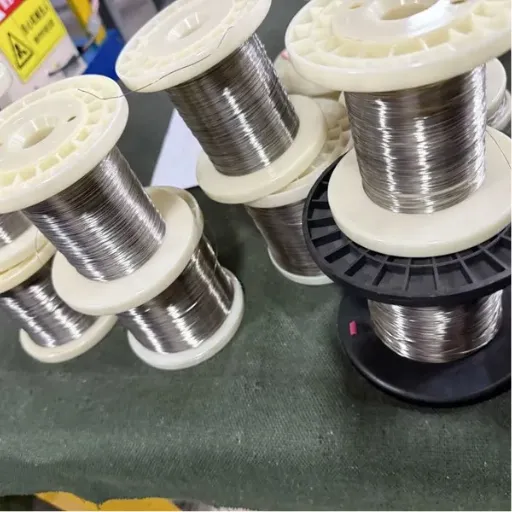 Read More
 -
Titanium Wire Diameter Tolerance: Specify, Measure, and Compare It
October 10, 2026Titanium wire diameter tolerance is the permitted variation around a specified wire diameter, defined by the governing standard, p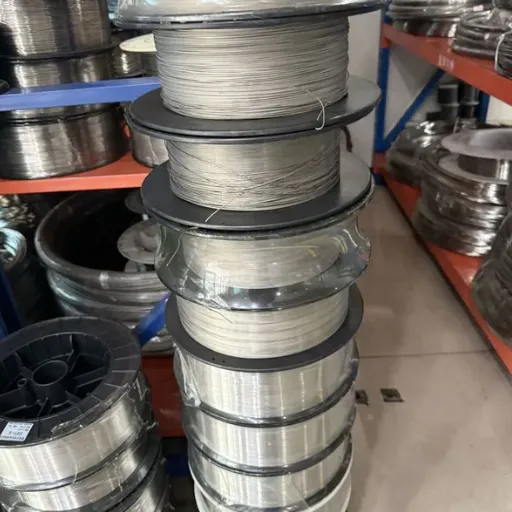 Read More
 -
Grade 1 Titanium Wire: Specify Grade, Diameter, Form, and Documents
October 9, 2026Grade 1 titanium wire should be specified as UNS R50250 with the applicable wire standard, then completed with diameter, tolerance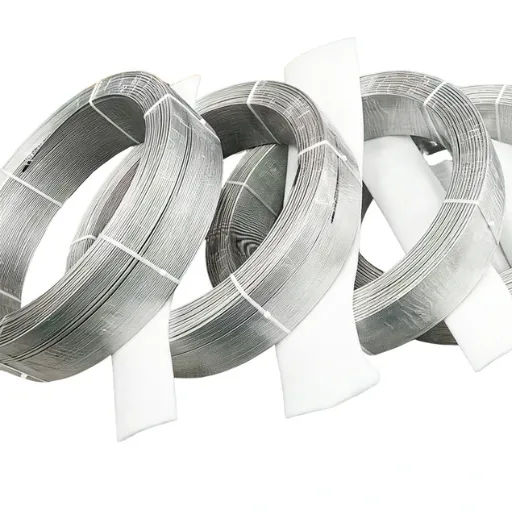 Read More
 -
Titanium Tube Inspection: Define Tests, Records, and Acceptance Requirements
October 9, 2026Titanium tube inspection is the project-defined verification of material identity, dimensions, condition, tests, and documents aga Read More

Contact Us
Recommended Products
-
 Titanium Alloy Plate Gr5 Gr7 Gr9 Gr12 Gr23 Cold Rolled Titanium Sheet Custom SizeNegotiableMOQ: 1 Ton
 -
Gr2 Titanium Alloy Rod Pickled Surface Hexagonal Titanium Bar Custom CuttingUS$ 20 - 40MOQ: 100 Kilograms
-
Grade1 Pure Titanium Wire ASTM B863 Standard Spool Titanium Wire Custom DiameterNegotiableMOQ: 100 Kilograms
-
Grade 2 Seamless Titanium Tube ASTM B338 Titanium Pipe Custom Length Pickled Surface Titanium TubingUS$ 20 - 40MOQ: 100 Kilograms
-
1mm Titanium Sheet Hot Rolled Titanium Plate Support Waterjet And CNC CuttingUS$ 20 - 40MOQ: 100 Kilograms
-
Thin Titanium Fine Wire Pickled Surface Titanium Wire Custom Diameter ToleranceNegotiableMOQ: 100 Kilograms
-
Titanium Round Bar Stock Gr1 Pure Titanium Rod Multiple Shape SelectionUS$ 20 - 40MOQ: 100 Kilograms
-
High-Temperature Alloy 800 Nickel-Iron-Chromium Tubing for Industrial ApplicationsUS$ 20 - 40MOQ: 100 Kilograms
-
Gr5 Ti Aluminum Vanadium Wire Titanium Welding Wire AWS A5.16 ComplianceNegotiableMOQ: 100 Kilograms
-
Gr23 Titanium Rod Annealed Condition Custom Length Titanium Bar UT Inspection AvailableUS$ 20 - 40MOQ: 100 Kilograms
-
CP Grade4 Titanium Alloy Rod Rolled Process Hex Titanium Bar Industrial ApplicationUS$ 20 - 40MOQ: 100 Kilograms
-
1 Inch 2 Inch Titanium Tubing Seamless Titanium Pipe Custom Cutting Titanium Tube For EngineeringUS$ 20 - 40MOQ: 100 Kilograms
-
4x8 Titanium Sheet Pure Titanium Plate Mill Finish Surface Cold Rolled Titanium SheetUS$ 20 - 40MOQ: 100 Kilograms
-
2mm Titanium Alloy Sheet Polished Titanium Plate For Chemical Corrosion ResistanceUS$ 20 - 40MOQ: 100 Kilograms
-
Custom Cut Titanium Plate Titanium Alloy Sheet With CNC Waterjet Shearing ProcessingNegotiableMOQ: 1 Ton
-
3mm Titanium Round Bar Gr2 Titanium Rod Strict Diameter Tolerance ControlUS$ 20 - 40MOQ: 100 Kilograms
-
Titanium Hypodermic Tubing Micro Thin Wall Titanium Tube Custom Tolerance Titanium PipeUS$ 20 - 40MOQ: 100 Kilograms
-
Titanium Grade2 Seamless Pipe Thin Wall Titanium Tubing Custom Length Titanium TubeUS$ 20 - 40MOQ: 100 Kilograms
-
2mm Titanium Alloy Wire Polished Surface Spool Packed Titanium WireNegotiableMOQ: 100 Kilograms
-
Ti-6Al-4V Titanium Alloy Sheet Grade Gr5 Titanium Plate For Aerospace ApplicationUS$ 20 - 40MOQ: 100 Kilograms