
 Business License

Grade 5 Titanium Bar: Build a Specification-Ready RFQ
A Grade 5 titanium bar request becomes useful for quotation when it states the alloy designation, governing requirement, form, condition, dimensions, tolerances, quantity, and acceptance needs. “Grade 5 titanium bar” identifies a starting point; it does not define the full supply scope.
Buyers can avoid unnecessary clarification by turning a short material request into one shared specification sheet. That sheet gives each seller the same information to review and makes deviations easier to spot. It also keeps the purchasing team from treating a supplier's general product description as an order-specific commitment.
Key takeaways
Use the project-required Grade 5, Ti-6Al-4V, 6Al-4V, or UNS R56400 terminology exactly as it appears in controlling documents.
State the applicable standard and edition only when the project requires them, then list drawing and purchase-order additions separately.
Define the bar form, section, length, tolerance, straightness, ends, surface, and delivered condition.
Name every inspection and documentation item instead of making a general request for a certificate.
Compare responses against one RFQ revision and record every assumption or proposed alternative.
Xi'an Fengyao Technology Co., Ltd. displays titanium bar/rod among its titanium product range. A buyer can submit a complete requirement through contact Fengyao for review. Product scope, availability, commercial terms, and technical acceptance must be confirmed for the actual inquiry.
What Grade 5 Titanium Bar Does and Does Not Define
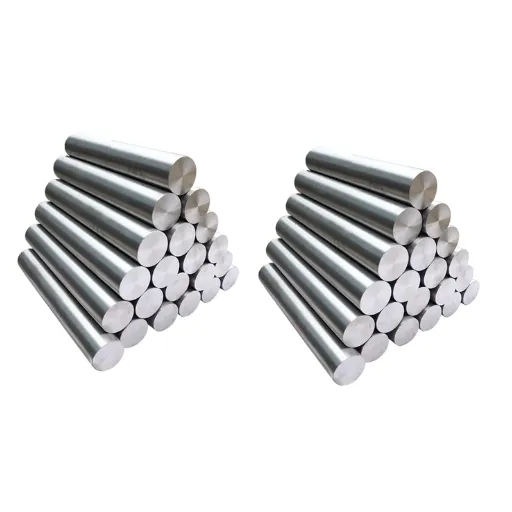
Grade 5 titanium bar tells a supplier that the request concerns a recognized titanium-alloy grade. It does not by itself specify the bar's form, size, standard, edition, heat-treatment or delivered condition, dimensional limits, inspection scope, document package, or delivery assumptions. Each of those points can change what a quotation covers.
The public page for ASTM B348/B348M-21 identifies Grade 5 as UNS R56400 and describes it as a titanium alloy with 6% aluminum and 4% vanadium. This helps a buyer align terminology across a drawing, purchase order, and RFQ. It is not proof that a specific seller has material available or will supply to that standard.
Use alloy names as identifiers, not as a complete specification
The terms Grade 5, Ti-6Al-4V, 6Al-4V, and UNS R56400 may appear in buying documents for the same general alloy designation. The correct wording is the wording required by the controlling project document. If a drawing uses one term and a purchasing record uses another, identify the discrepancy before requesting a final quotation.
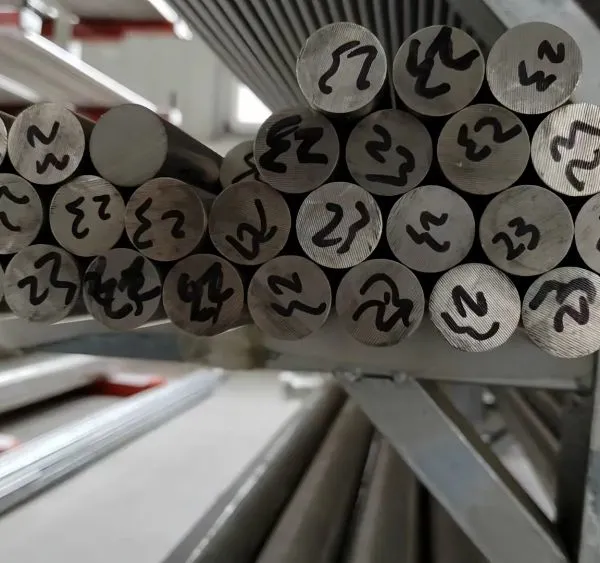
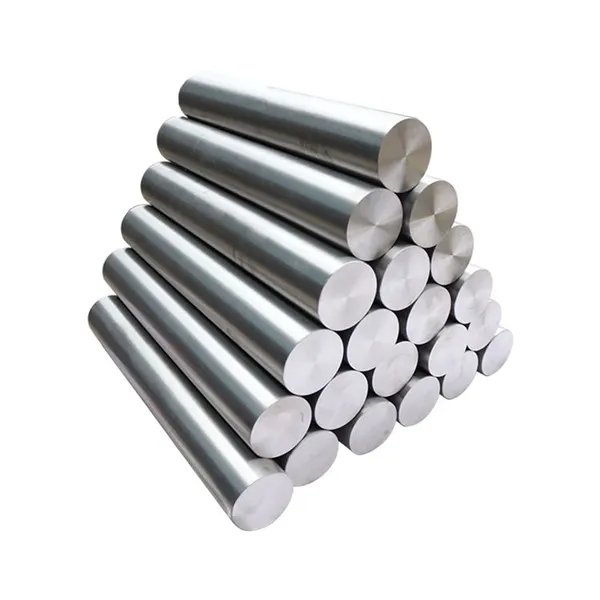
A Grade 5 titanium bar request should also make clear whether the buyer requires a round bar or another project-defined section. Do not assume a round form just because many supplier pages use round-bar imagery. State the requested form and attach a drawing when corners, dimensions, marking, or end details matter.
Illustrative scenario: a short request created three scopes
An illustrative purchaser emails “Grade 5 titanium bar, 25 mm, please quote.” One seller reads the request as a nominal round bar, another assumes a finished diameter, and a third asks whether a cut length is required. The buyer adds form, dimension tolerance, length, surface condition, quantity, and drawing revision. The updated request gives every seller a basis to answer the same requirement.
Treat supplier pages as prompts for questions
Supplier pages may display dimensions, price, stock language, surface descriptions, certificates, or applications. Those statements belong to the seller that made them. They should prompt the buyer to ask targeted questions, not become implied terms in a Grade 5 titanium bar order.
The safest approach is simple: list what the project needs, label unresolved points, and ask each supplier to identify exceptions. This keeps technical scope separate from marketing language and gives the purchasing team a useful comparison record.
State the Standard, Condition, and Project Controls
A standard reference can organize a Grade 5 titanium bar requirement, but it is not a shortcut around the rest of the specification. ASTM's B348/B348M-21 public scope covers annealed titanium and titanium-alloy bars and billets. Whether that standard, a particular edition, or another project route applies depends on the purchaser's drawing, contract, and acceptance requirements.
Make the governing reference explicit
If the project calls for ASTM B348, state the full reference and edition in the RFQ. Add any customer specification, purchase-order note, drawing revision, or inspection plan that changes the requirement. When a standard is mentioned without an edition, ask the project owner whether an edition is controlled before a supplier is asked to price.
The ASTM nonferrous metal standards index can help locate the relevant standards family. It does not decide which standard or condition the project requires, and it does not establish that any seller will meet a named requirement.
Separate condition from grade
Grade, condition, and acceptance criteria serve different purposes. Grade 5 titanium bar identifies the alloy designation. The delivered condition must be stated as required by the governing documents, rather than assumed from a generic listing. The ASTM public abstract also mentions that covered annealed material may be furnished descaled, sandblasted, ground, or rough turned. Those are standard-level terms, not a menu of conditions offered by Fengyao or any other supplier.
State the required condition, surface, and any project-specific treatment or acceptance wording in the inquiry. If the technical team has not decided, write “to be confirmed” and identify the person or document that will resolve it. That is clearer than leaving the supplier to guess.
Illustrative scenario: the revision was the missing control
An illustrative team copies a standard number from a previous order and sends it with a new Grade 5 titanium bar inquiry. During review, the engineer finds that the current drawing cites a different revision and adds a separate documentation clause. The buyer reissues the RFQ with the current revision and asks suppliers to state any exceptions. Quote comparison can then proceed on the current project basis.
Keep application selection with the responsible engineer
This guide is about making a bar RFQ reviewable. It does not select material for aerospace, medical, chemical, marine, or other controlled applications. The responsible engineer and governing project documents should define material selection, condition, tests, and acceptance criteria before purchasing starts.
Define Grade 5 Titanium Bar Form, Dimensions, and Surface
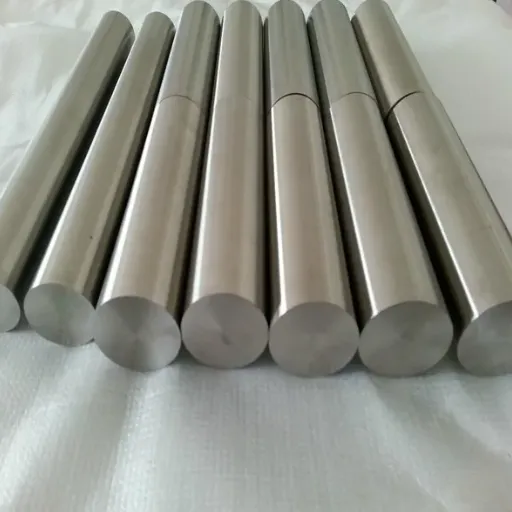
The next task is to convert a part or purchasing need into measurable fields. A Grade 5 titanium bar inquiry needs the requested form, section size, unit, and tolerance. It also needs the length, length tolerance, straightness requirement when applicable, end condition, surface requirement, delivered condition, and quantity.
Start with the form and controlling dimensions
For a round Grade 5 titanium bar, state the diameter and the applicable tolerance. For any other project-specified section, use the drawing terms and identify the controlling section dimensions. Attach a legible drawing or sketch where geometry cannot be expressed safely in a sentence.
State the required length, its tolerance, and whether a machining allowance or cut-length arrangement is required. If multiple lengths are acceptable, list every permitted range or identify the selection rule. If the buyer needs a piece count and a total mass, include both. These details prevent one seller from pricing a different quantity basis than another.
Add straightness, ends, and surface to the same document
Straightness may matter to receiving, machining, assembly, or inspection. End condition may matter when a downstream operation needs a particular cut presentation. Surface and delivered condition may affect the next process or the acceptance check. Include all of these in the Grade 5 titanium bar RFQ whenever they are relevant.
Do not invent a default tolerance or surface condition from a supplier's catalogue. If the project does not define one, record it as an open item and request a proposed condition for review. A supplier's reply should identify the assumption rather than conceal it in a broad product label.
Illustrative scenario: a matrix exposed the differences
An illustrative buyer receives three responses for Grade 5 titanium bar. One uses a piece price, one uses mass, and one says nothing about surface or document scope. The buyer issues one requirements matrix with form, dimensions, length, tolerance, condition, quantity, and requested records. The second-round replies are easier to compare because each answer is measured against the same rows.
Give the supplier the document context
Attach the latest drawing and identify its revision. If an acceptance criterion is held in a customer document, attach the relevant section or identify its exact reference. Do not expect a supplier to infer machining allowance, marking, packaging protection, or inspection instructions from the material grade alone.
For company background, readers may review Fengyao's company profile. The store presents the business as a trading company, so order-specific requirements should be reviewed and confirmed rather than inferred from a general company page.
Make Inspection and Documentation Reviewable
Inspection and document requirements belong in the first Grade 5 titanium bar inquiry. A generic request for a “certificate” can lead to different interpretations. Instead, name every document, report, identification record, or inspection result required by the project, then identify the governing clause and revision.
Ask for a response to each item
For each required item, state whether it is needed before order release, with delivery, or for receiving review. State the format when it matters. If a third-party inspection or a specified test is required, name it in the RFQ and ask for confirmation against the order scope. Do not assume that a supplier provides material test reports, certificates, traceability, or tests unless the response confirms the request.
Use a short list to keep the request auditable:
required standard and edition;
drawing and customer-document revisions;
dimensional and visual acceptance points;
required inspection, testing, or documentation items;
marking and packaging needs;
destination, requested timing, and commercial questions still open.
Keep a revision trail
Store the original RFQ, attachments, supplier questions, responses, and final revisions together. When a requirement changes, give the change a revision reference and ask whether it affects price, scope, documentation, or timing assumptions. This helps prevent a Grade 5 titanium bar quotation from being accepted against an outdated document set.
The embedded video below is general terminology orientation only. It does not prove Fengyao inventory, production, inspection, or supply capability.
Compare Grade 5 Titanium Bar Quotes Without Mixing Scopes
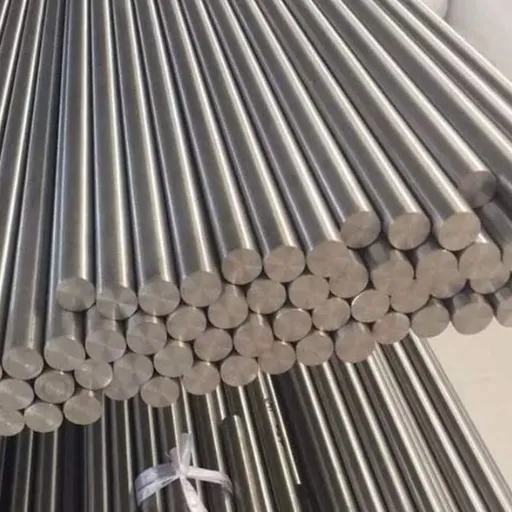
Price comparison works only after technical scope is aligned. A low figure may exclude a condition, dimension, document, or packaging assumption that another response includes. Before choosing a Grade 5 titanium bar offer, compare every reply with the same requirements matrix.
Use one comparison sheet
Create rows for alloy designation, standard and edition, form, section, tolerance, length, straightness, end condition, surface, delivered condition, quantity, inspection, documents, packaging, destination, price basis, quote validity, and stated assumptions. Mark every row as confirmed, different, excluded, or pending.
If a seller proposes a different condition, section, tolerance, or document scope, keep that proposal in a separate deviations column. The responsible buyer or engineer can then decide whether to accept it. Do not merge a proposed alternative into the original Grade 5 titanium bar requirement just because it appears in a quotation.
Check commercial basis before selecting
Confirm whether quantity is priced by pieces, length, or mass. Ask how packaging, freight terms, taxes, and timing assumptions are treated where relevant. These questions do not presume any particular price or delivery arrangement; they make the commercial basis visible.
When you are ready, submit the completed RFQ through contact Fengyao. Ask for a review that identifies scope, missing details, and assumptions. That gives the inquiry a concrete next step without promising stock, pricing, or an outcome.
Copy-and-Send Grade 5 Titanium Bar RFQ
Use this template as a starting point. Replace every bracketed field with the actual project requirement. For an undecided item, write “to be confirmed” and identify the controlling person or document.
Product: Grade 5 titanium bar [round or other project-specified form]
Material designation: [Grade 5 / Ti-6Al-4V / UNS R56400 as required]
Applicable standard and edition: [state governing project requirement]
Condition: [state project requirement]
Section size: [diameter or section, unit, tolerance]
Length: [required length and length tolerance]
Straightness / end condition: [state requirement or “to be confirmed”]
Surface and delivered condition: [state requirement]
Quantity: [pieces and/or total mass]
Drawing or revision: [attach if applicable]
Inspection and documents: [list each requirement]
Destination, packaging, and requested timing: [state]
Open technical or commercial items: [list for confirmation]
Before sending the inquiry
Check that units are consistent, that the drawing revision is current, and that every critical tolerance appears in the request. Add the purchase-order or customer clauses that affect acceptance. Send the same issue to each supplier when you need comparable responses.
The Xi'an Fengyao Technology Co., Ltd. storefront is a starting point for its listed titanium product families. Send your completed Grade 5 titanium bar requirement to contact Fengyao and request confirmation of the technical scope, documentation needs, commercial basis, and open items.
Frequently asked questions
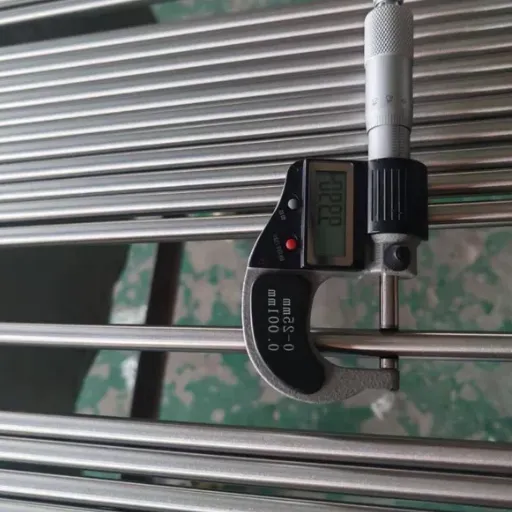
What does Grade 5 mean in a titanium bar RFQ?
ASTM B348/B348M-21 identifies Grade 5 as UNS R56400, a titanium alloy with 6% aluminum and 4% vanadium. The RFQ still needs a form, dimensions, standard, condition, and project acceptance requirements.
Is ASTM B348 enough to request Grade 5 titanium bar?
It can be a governing reference when the project requires it, but the buyer should state the edition and all drawing, condition, documentation, and inspection requirements that apply.
Which dimensions should I include?
State the form, diameter or project-defined section, units, tolerance, length, length tolerance, straightness where relevant, end condition, surface, and delivered condition.
How should I request documents?
Name each required document or inspection record, identify the controlling clause and revision, state when it is needed, and request order-specific confirmation.
Final note
A complete Grade 5 titanium bar RFQ helps a buyer compare like with like. It does not establish availability, price, timing, standards compliance, testing, or documentation until the supplier confirms the actual requirement. Start with the checklist, attach the current documents, and keep every open item visible until it is resolved.
Recently Posted
-
Thin Wall Titanium Tubing: Build a Specification-Ready RFQ
September 23, 2026Thin wall titanium tubing should be specified by its grade, standard, form, OD, ID when relevant, wall thickness, tolerances, oval Read More
 -
Titanium Bar for Machining: Build a Better Stock RFQ
September 22, 2026When buying titanium bar for machining, state the grade, condition, stock form, dimensions, tolerance, machining allowance, straig Read More
 -
Seamless Titanium Tube: Build a Clear Specification-Ready RFQ
September 22, 2026A seamless titanium tube RFQ should state the grade, governing standard, OD, wall thickness, length, tolerances, condition, quanti Read More
 -
Grade 2 Titanium Tube: Prepare a Specification-Ready RFQ
September 22, 2026A Grade 2 titanium tube RFQ should state the material designation, governing standard, seamless or welded form, outside diameter,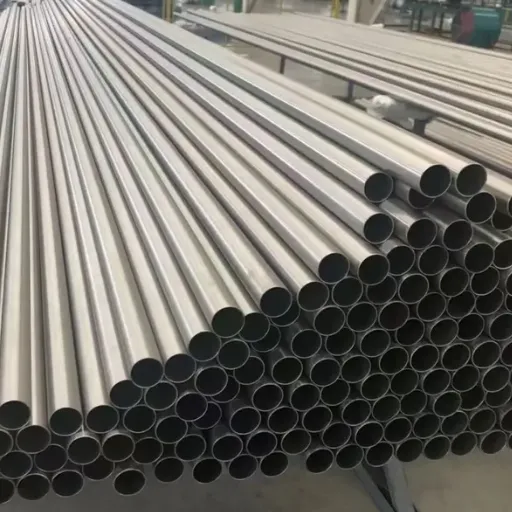 Read More

Contact Us
Recommended Products
-
 Titanium Alloy Plate Gr5 Gr7 Gr9 Gr12 Gr23 Cold Rolled Titanium Sheet Custom SizeNegotiableMOQ: 1 Ton
 -
Gr2 Titanium Alloy Rod Pickled Surface Hexagonal Titanium Bar Custom CuttingUS$ 20 - 40MOQ: 100 Kilograms
-
Grade1 Pure Titanium Wire ASTM B863 Standard Spool Titanium Wire Custom DiameterNegotiableMOQ: 100 Kilograms
-
Grade 2 Seamless Titanium Tube ASTM B338 Titanium Pipe Custom Length Pickled Surface Titanium TubingUS$ 20 - 40MOQ: 100 Kilograms
-
1mm Titanium Sheet Hot Rolled Titanium Plate Support Waterjet And CNC CuttingUS$ 20 - 40MOQ: 100 Kilograms
-
Thin Titanium Fine Wire Pickled Surface Titanium Wire Custom Diameter ToleranceNegotiableMOQ: 100 Kilograms
-
Titanium Round Bar Stock Gr1 Pure Titanium Rod Multiple Shape SelectionUS$ 20 - 40MOQ: 100 Kilograms
-
High-Temperature Alloy 800 Nickel-Iron-Chromium Tubing for Industrial ApplicationsUS$ 20 - 40MOQ: 100 Kilograms
-
Gr5 Ti Aluminum Vanadium Wire Titanium Welding Wire AWS A5.16 ComplianceNegotiableMOQ: 100 Kilograms
-
Gr23 Titanium Rod Annealed Condition Custom Length Titanium Bar UT Inspection AvailableUS$ 20 - 40MOQ: 100 Kilograms
-
CP Grade4 Titanium Alloy Rod Rolled Process Hex Titanium Bar Industrial ApplicationUS$ 20 - 40MOQ: 100 Kilograms
-
1 Inch 2 Inch Titanium Tubing Seamless Titanium Pipe Custom Cutting Titanium Tube For EngineeringUS$ 20 - 40MOQ: 100 Kilograms
-
4x8 Titanium Sheet Pure Titanium Plate Mill Finish Surface Cold Rolled Titanium SheetUS$ 20 - 40MOQ: 100 Kilograms
-
2mm Titanium Alloy Sheet Polished Titanium Plate For Chemical Corrosion ResistanceUS$ 20 - 40MOQ: 100 Kilograms
-
Custom Cut Titanium Plate Titanium Alloy Sheet With CNC Waterjet Shearing ProcessingNegotiableMOQ: 1 Ton
-
3mm Titanium Round Bar Gr2 Titanium Rod Strict Diameter Tolerance ControlUS$ 20 - 40MOQ: 100 Kilograms
-
Titanium Hypodermic Tubing Micro Thin Wall Titanium Tube Custom Tolerance Titanium PipeUS$ 20 - 40MOQ: 100 Kilograms
-
Titanium Grade2 Seamless Pipe Thin Wall Titanium Tubing Custom Length Titanium TubeUS$ 20 - 40MOQ: 100 Kilograms
-
2mm Titanium Alloy Wire Polished Surface Spool Packed Titanium WireNegotiableMOQ: 100 Kilograms
-
Ti-6Al-4V Titanium Alloy Sheet Grade Gr5 Titanium Plate For Aerospace ApplicationUS$ 20 - 40MOQ: 100 Kilograms